Should You Pay for a Ryanair Seat? The Rows That Are Actually Worth It
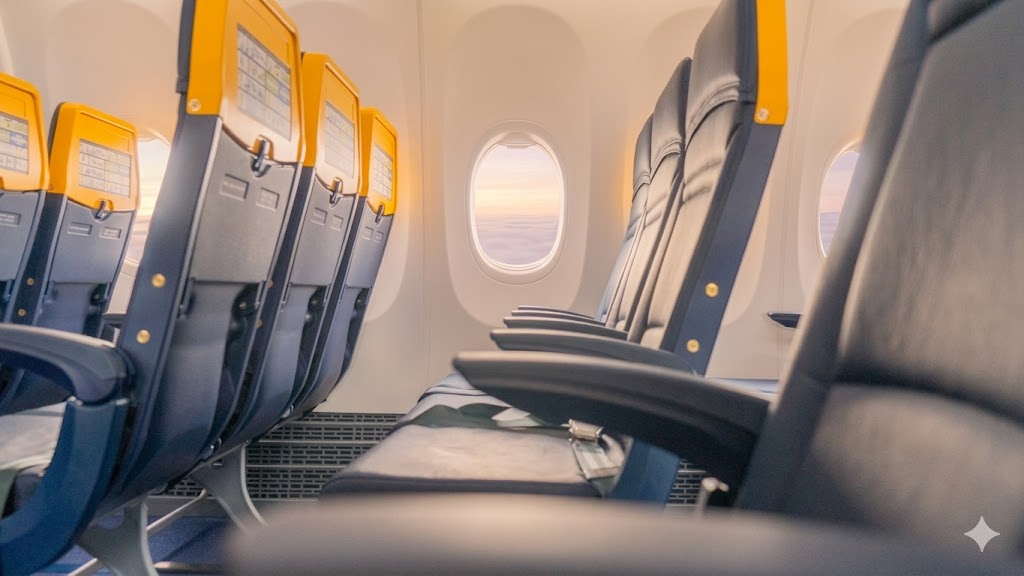
Ryanair carries more passengers than any airline in Europe, and almost every one of them faces the same question at checkout: pay for a seat, or take what you're given? The answer depends on who you're flying with, how tall you are, and which rows you're choosing between.
Flying Ryanair but not sure which aircraft? See all Ryanair seat maps: Ryanair swaps aircraft, and the layouts differ.
How Ryanair Seat Selection Works
If you don't pay for a seat, Ryanair assigns one randomly when you check in online (24 hours before departure on a Basic fare, up to 60 days out if you've paid for a seat). You'll get a seat — but you won't choose where, and if you're travelling with others, you probably won't sit together.
If you do pay, you're choosing from three tiers:
Extra Legroom (Rows 1, 16–17)
32–34" pitch vs the standard 30". Includes priority boarding. Typically €10–€35 depending on route and demand. Row 1 has no under-seat storage (bags go overhead). Rows 16–17 are exit rows with similar legroom but you're mid-cabin rather than at the front.
Front Seats (Rows 2–5)
Same 30" pitch as standard, but you're first off the plane and guaranteed overhead bin space. Includes priority boarding. Usually €8–€20.
Standard Seats (Rows 6–33)
The same seat everywhere. 30" pitch, 17" wide, no recline. Typically €2–€10. The only question is where in the cabin you end up.
All pricing is dynamic — the same seat costs more on a summer Malaga flight than a midweek November run to Wrocław.
When Paying Is Worth It
Travelling with Children
This one's non-negotiable. Ryanair requires at least one adult in a family booking to buy a seat, and then up to four children get free adjacent seats. The cost starts at around €6. Without it, you risk being separated from young kids — Ryanair won't rearrange the cabin for you.
You're Tall (6ft+)
The jump from 30" to 34" pitch in the exit rows makes a real difference on anything over two hours. Rows 16–17 are the best value — they're usually cheaper than Row 1 and offer comparable legroom.
You Want Overhead Bin Access
Ryanair only guarantees cabin bag space for the first ~90 passengers to board. Seats in the front rows (1–5) and certain other rows come with priority boarding, which gets you on early enough to use the bins. If your bag matters, this is the real reason to pay — not the seat itself.
Short Connection at the Other End
Front rows (1–5) deplane first. On a tight connection at a big airport, that five-minute head start on passport control can matter.
When It's Not Worth It
Solo Traveller, No Preference
If you genuinely don't care where you sit and you're flying alone, random assignment is fine. You'll get a seat. It might be a middle in row 28, but it's free.
Short Flights Under 90 Minutes
The difference between 30" and 34" pitch barely registers on a Dublin–Manchester hop. Save the €15.
You're Already on a Regular Fare
Regular includes standard seat selection and priority boarding. Don't pay again for something that's bundled in your ticket.
The Row-by-Row Verdict
Ryanair operates two aircraft types with slightly different layouts. Here's the quick version — for full row-by-row detail with seat maps, see our dedicated guides.
Boeing 737-800 (189 seats)
| Rows | Tier | Worth Paying? |
|---|---|---|
| Row 1 (1A/B/C only) | Extra Legroom | Yes if tall. No under-seat storage. 1A/1C are window/aisle — avoid 1B. |
| Row 2 (2D/E/F only) | Extra Legroom | Yes. Good legroom, quick exit from front door. 2D or 2F best. |
| Rows 2–5 | Front | Worth it for early deplaning and bin space. Same seat as everywhere else. |
| Rows 6–15 | Standard | Rows 6–10 are fine. Row 11 has misaligned or missing windows — avoid if you want to look outside. |
| Rows 16–17 | Extra Legroom (exit) | Best value on the plane. Exit-row legroom at a lower price than Row 1. No under-seat storage. Can't sit here if you have reduced mobility. |
| Rows 18–30 | Standard | All identical. Nothing wrong with them, nothing special. |
| Rows 31–33 | Standard (rear) | Last off the plane. Close to rear lavatories. Avoid if you can. |
→ Full Ryanair 737-800 Seat Guide
Boeing 737 MAX 8-200 (197 seats)
The MAX 8-200 is Ryanair's newer aircraft with eight extra seats squeezed in. The cabin is slightly different:
| Rows | Tier | Worth Paying? |
|---|---|---|
| Row 1 | Extra Legroom | Same as 737-800. Good legroom, no under-seat storage. |
| Rows 2–5 | Front | Quick exit. Same standard seat. |
| Rows 6–15 | Standard | Standard pitch. The MAX 8-200 has slightly better seat cushioning than the 737-800. |
| Rows 16–17 | Extra Legroom (exit) | Best value. ~35" pitch on the MAX 8-200. |
| Rows 18–33 | Standard | Identical. |
| Rows 34–35 | Standard (rear) | Two extra rows compared to the 737-800. Last off, near lavs. Avoid. |
→ Full Ryanair 737 MAX 8-200 Seat Guide
How to Tell Which Aircraft You're On
Ryanair operates both the 737-800 (189 seats) and 737 MAX 8-200 (197 seats). If your seat map shows rows going up to 33, it's a 737-800. If it goes to 35, it's a MAX 8-200. The MAX has slightly newer seats with more cushioning, but the layout logic is the same.
Use Find My Seat → to check which aircraft is operating your specific flight.
The Bottom Line
For most Ryanair passengers, the only seats worth paying for are:
- Rows 16–17 (exit row) — if you're tall or on a flight over two hours
- Rows 2–5 (front) — if you need overhead bin space or have a tight connection
- Any seat — if you're travelling with kids (mandatory)
Everything else? Save the money unless sitting together with a companion is important to you, in which case a standard seat at €2–€5 each is cheap insurance against being separated.
Related Guides
- Ryanair Boeing 737-800 Seat Selection Guide — 189 seats, full row-by-row breakdown with interactive seat map.
- Ryanair Boeing 737 MAX 8-200 Seat Selection Guide — 197 seats, Europe's densest 737.
- easyJet Airbus A320 Seat Selection Guide — 186 seats, wider Airbus cabin, same no-recline concept.