Air India A320neo Seat Selection Guide (2026)
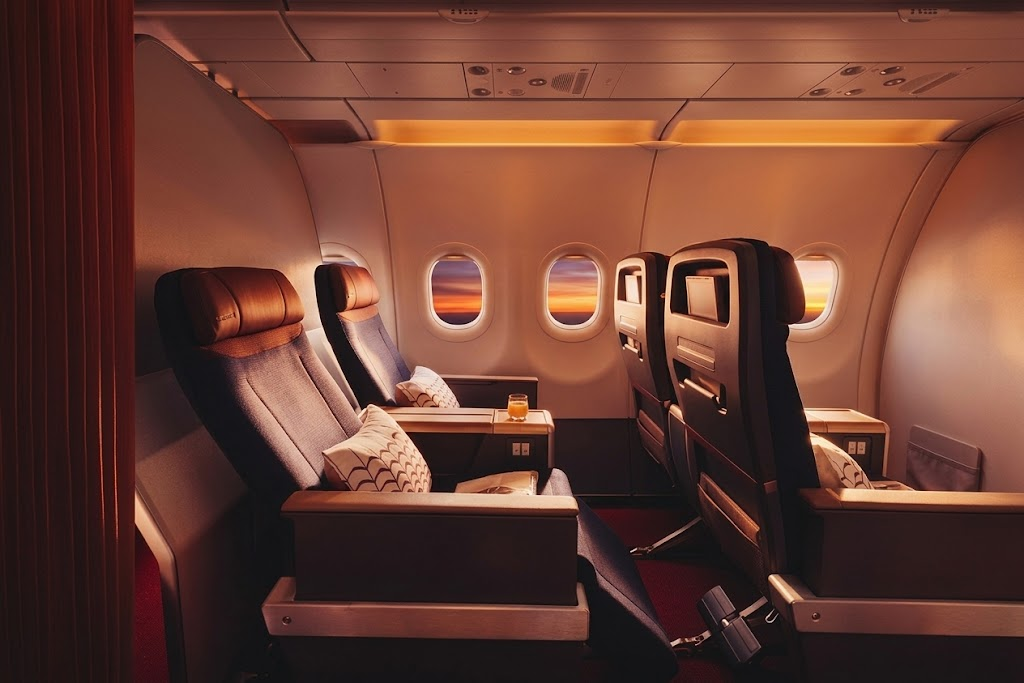
✈️ Quick Verdict
Aircraft: Airbus A320neo — 83 aircraft, the largest single sub-fleet Air India operates
Config: 164 seats — 8 Business / 24 Premium Economy / 132 Economy
Layout: Business 2-2 recliner, rows 1–2 · Premium Economy 3-3, rows 3–6 · Economy 3-3, rows 7–29 (no row 13)
Version lottery: No — one configuration across all 83 aircraft. But see the note on row 30 below
Best in Business: 1A — bulkhead room, a properly aligned window, and no galley in front of it
Best in Premium Economy: 4A, 4F, 6A and 6F — the fare you paid for, with a window that lines up
Best in Economy: Row 11, all six seats — 87cm of pitch and it still reclines. Then 10C and 10D
Seats to avoid: All of row 3 — premium economy's own bulkhead, 16in to the wall, no underseat storage · 9A, 9B, 9E, 9F (no recline, no extra room) · 29A and 29F (no window at all)
IFE: no seatback screens in any cabin — streaming to your own device · Power: USB charging throughout · WiFi: none
Air India put premium economy on an A320. Then it put the worst seat in that cabin at the front of it.
Three-class narrowbodies barely exist. A handful of airlines run a proper premium economy cabin on an A320-family aircraft, and Air India is one of them: 24 seats between Business and Economy across all 83 of its A320neos, on domestic trunk routes and short-haul international sectors that would elsewhere be a two-class jet at best.
Premium Economy sits at rows 3 to 6. Row 3 is where it begins, immediately behind the Business cabin, and on a booking map that looks like the seat to take — front of the cabin, first to be served, nothing in front of you. What is actually in front of you is a wall, 41 to 42 centimetres away. That is closer than a normal bulkhead, and it is measured, not estimated. All six seats in row 3 also lose their underseat storage, because there is no seat ahead to put a bag under.
Sixteen inches is not bulkhead legroom. A generous bulkhead gives you open floor and a wall far enough away to stretch into. This one gives you less floor than the seat behind it, and takes your bag space as payment. Every one of the six seats in row 3 rates below the rows behind it. If you are buying Premium Economy for the legroom, row 3 is the row that does not deliver it.
Business Class — rows 1 and 2
Eight seats in a 2-2 recliner, A and C on the left, D and F on the right. Air India specifies 40 inches of pitch with seven inches of recline, an adjustable footrest and a device holder in the tray table. Four of the eight have direct aisle access, which is what 2-2 means: the aisle seats.
Row 1 leads the cabin and every seat in it gets extra room ahead at the bulkhead. That is the good news. The complication is what sits on the other side of that bulkhead on the right-hand side: 1D and 1F face a galley, so expect meal-prep noise and cabin lighting through the curtain gap on an early-morning departure. 1C faces a bulkhead that is 85% solid — the small gap on its right is there, but it is not enough to be worth choosing for.
1A is the pick. Bulkhead room ahead, a window that lines up properly with the seat, no galley on that side. If you would rather not be in the front row at all, 2A and 2F both have well-aligned windows and sit clear of the galley — they are the quiet choice.
Business Class — the short version
- Best: 1A — bulkhead legroom plus a good window, and no galley
- Best without the front row: 2A or 2F
- Aisle preference: 1C or 1D — 1C has a slightly open bulkhead, 1D has the galley
- Compromised: 1D and 1F — galley noise and light directly ahead
Premium Economy — rows 3 to 6
Twenty-four seats in four rows of 3-3, so the layout is identical to economy and the difference is what you sit in and how much space is around it. Air India specifies 32 inches of pitch with four inches of recline, a four-way headrest, a device holder and a USB port. Against standard economy behind it, that is roughly three extra inches of legroom per seat.
Three of the four rows deliver it. Rows 4, 5 and 6 are ordinary premium economy rows with underseat storage and a seatback in front. Rows 4 and 6 have the best windows — both A and F line up cleanly with the seat. Row 5's windows sit slightly off, which matters less than it sounds on a short sector but is the only thing separating it from the other two.
Row 3 is the row to avoid, for the reasons above. If the seat map shows row 3 as the only Premium Economy availability and the fare difference is meaningful, understand what you are buying: a wider, better-padded seat with a wall in front of it and no floor bag space. The seat is still better than economy. The legroom is not.
Premium Economy — the short version
- Best window: 4A, 4F, 6A, 6F — properly aligned windows and full seat pitch
- Best aisle: 4C, 4D, 6C, 6D
- Fine: all of rows 4, 5 and 6
- Avoid: all six seats in row 3 — 41–42cm to the bulkhead, no underseat storage
Economy — rows 7 to 29, and the exit row that does not recline
Standard economy pitch works out at about 75 centimetres, roughly 29 to 30 inches, on a slimline seat, and it has been measured at 28. Either way this is a tight cabin by the standards of Indian domestic flying, and the extra-legroom rows are worth more here than they would be on a roomier aircraft.
There are two of them, and they are consecutive. Row 10 runs 85cm and row 11 runs 87cm — ten and twelve centimetres more than the cabin norm respectively. Both sit at an overwing exit. Only one of them reclines.
Row 11 is the best economy row on the aircraft. It carries the most pitch in the cabin — 87cm, about 34 inches — and unlike row 10 there is no exit behind it, so all six seats recline normally. Every seat in row 11 rates well. If you are buying one paid seat assignment on this aircraft, buy a seat in row 11.
Row 10 is the trap. It looks identical on a booking map, it carries almost the same pitch, and it usually costs the same. But 10A, 10B, 10E and 10F sit directly in front of the second exit and cannot fully recline, because the path to that door has to stay clear. You pay extra-legroom money for a seat that will not go back. 10C and 10D are the exception — the two aisle seats are clear of the exit path, so they get the 85cm and keep their recline. They are the second-best economy seats on the jet.
Row 9 is worse than either. 9A, 9B, 9E and 9F sit in front of the first exit, so they carry the same recline restriction — with none of the extra pitch. It is the standard cabin norm and a fixed seatback. If you are picking by row number alone, row 9 is the one to step past.
The rest of the economy cabin
Behind the exits, rows 12 through 27 are ordinary. Two things vary within them. 15A, 15F, 22A and 22F have windows set behind the seat — you can see out, but you have to lean back to do it, which is the sort of thing that only registers once you are in the seat. 18A, 18F, 23A and 23F are the opposite: windows that line up cleanly, and the best window seats in the rear cabin.
At the back, 28C, 28D, 28E and 28F sit against the rear galley — noise and light during the service. Row 29 is the last row and it is comprehensively bad: every seat in it has the lavatory queue immediately behind, 29C, 29D and 29E add the galley to that, and 29A and 29F have no usable window at all. The fuselage is plugged at that position. They are the two worst seats on the aircraft and they are among the most likely to still be free at check-in.
Cabin features
| Business | Premium Economy | Economy | |
|---|---|---|---|
| Seats | 8 | 24 | 132 |
| Rows | 1–2 | 3–6 | 7–29 (no 13) |
| Layout | 2-2 | 3-3 | 3-3 |
| Pitch | 40in | 32in | ~75cm (29–30in) · 85–87cm at rows 10–11 |
| Recline | 7in | 4in | Limited — restricted at rows 9 and 10 windows |
| Screens | None | None | None |
| Power | USB | USB | USB |
| WiFi | None fitted | ||
There are no seatback screens anywhere on this aircraft, in any cabin. Air India's entertainment on the A320neo streams to your own phone or tablet, and there is no internet connectivity, so download before you board. Every cabin has USB charging, and the Business and Premium Economy seats include a holder to prop a device in.
If your seat map shows a row 30
One thing worth knowing before you pick. The cabin drawn here ends at row 29 and totals 164 seats: 8, 24 and 132. Air India's own description of the retrofitted A320neo cabin puts economy at 138 seats and the aircraft at 170 — a difference of exactly one row of six.
We have not been able to reconcile that, and we are not going to guess which is right. What matters to you is practical: if the seat map for your flight shows a row 30, treat it as the true back row — the one hard against the rear lavatories, with the same problems row 29 has here and probably worse. If it ends at row 29, this guide's row numbers are your row numbers.
Not to be confused with Air India Express
Air India Express flies its own A320neos on many of the same domestic and Gulf routes, under IX flight numbers. Those aircraft are all-economy — no Business, and no Premium Economy at all. If you are booking a fare that shows a premium cabin, check the operating carrier on the itinerary before you plan around anything in this guide.
Quick-pick summary
| If you are… | Take | Why |
|---|---|---|
| Flying Business | 1A | Bulkhead room, aligned window, no galley on that side |
| Flying Premium Economy | 4A / 4F / 6A / 6F | Full 32in pitch, storage under the seat ahead, good windows |
| Buying one paid economy seat | Row 11 | 87cm of pitch and it still reclines — the best row in economy |
| Legroom on the aisle | 10C or 10D | 85cm and clear of the exit path, so recline is intact |
| A couple, no middle seat wanted | 1A + 1C or 2A + 2C | Business is 2-2 — the only pairs on the aircraft |
| Travelling with a child | Rows 18 or 23 | Well-aligned windows, clear of exits, galleys and lavatories |
| Wanting off first | Row 7 | First economy row, standard pitch, no recline restriction |
| Paying nothing and hoping | Anything but 29A or 29F | No window, and the lavatory queue behind you |
Frequently asked questions
Does Air India really have premium economy on the A320neo?
Yes — 24 seats at rows 3 to 6, across all 83 aircraft. It is a genuine separate cabin with 32 inches of pitch, four inches of recline and its own service, not a blocked-middle arrangement. It is one of a very small number of premium economy cabins on any A320-family aircraft anywhere.
Which is the best economy seat on Air India's A320neo?
Any seat in row 11. It has the most legroom in the cabin at 87cm, about 34 inches, and it is the only extra-legroom row where every seat still reclines. Row 10's aisle seats, 10C and 10D, are next best.
Why should I avoid row 3 if it is at the front of premium economy?
Because it is the cabin's bulkhead row and the wall is unusually close — 41 to 42 centimetres from the seat, less than a normal bulkhead gives you. All six seats also lose underseat storage, so your bag goes overhead for the whole flight. Rows 4, 5 and 6 give you the pitch the fare is meant to buy.
Are there seatback screens or wifi?
Neither. There are no screens in any cabin and no internet connectivity fitted. Air India streams entertainment to your own device instead, so bring a phone or tablet and something to prop it with. Every seat has USB charging.
Which seats have no window?
29A and 29F. The fuselage is plugged at that position, so there is no usable window at all — and both seats also sit against the rear lavatories. 15A, 15F, 22A and 22F do have windows, but they are set behind the seat, so you have to lean back to see out.
Is Air India's A320neo the same as Air India Express's?
No. Air India Express operates its own A320neos under IX flight numbers in an all-economy layout — no Business, no Premium Economy. Check the operating carrier on your itinerary before using this guide's row numbers.
Related Guides
- Air India 787 Seat Selection Guide (2026)
- Air India 777-300ER Seat Map & Best Seats (2026)
- Air India Airbus A350-900 Seat Selection Guide (2026)
- IndiGo A320neo Seat Selection Guide (2026)
- British Airways A320neo Seat Selection Guide (2026)
- Air India A321neo Seat Map & Best Seats (2026)
- Air India Express 737 MAX 8 Seat Selection Guide (2026)
- Air India Express 737-800 Seat Selection Guide (2026)