China Airlines A330-300 Seat Selection Guide (2026)
Quick Verdict
Aircraft: Airbus A330-300 — 12 aircraft, two configurations
Config A: 307 seats — 30 Business (angle-flat), 277 Economy · 4 aircraft
Config B: 313 seats — 36 Business (recliner), 277 Economy · 8 aircraft
Layout: Business 2-2-2 on both · Economy 2-4-2 on both
Seat letters: A B / D E F G / J K — C, H and I are all skipped
Version lottery: Yes — but only in Business. The 277-seat economy cabin is identical on all twelve aircraft
Best in Business: 2D and 2G on either version — direct aisle access, no lavatory, no bassinet
Best in Economy: 31A/K, 33A/K, 35A/K, 37A/K, 39A/K for windows · 27A for legroom · 43K if you want space beside you
Seats to avoid: 12A and 12K (no window) · all of rows 25 and 26 · 27K (door in your legroom) · the last row of Business
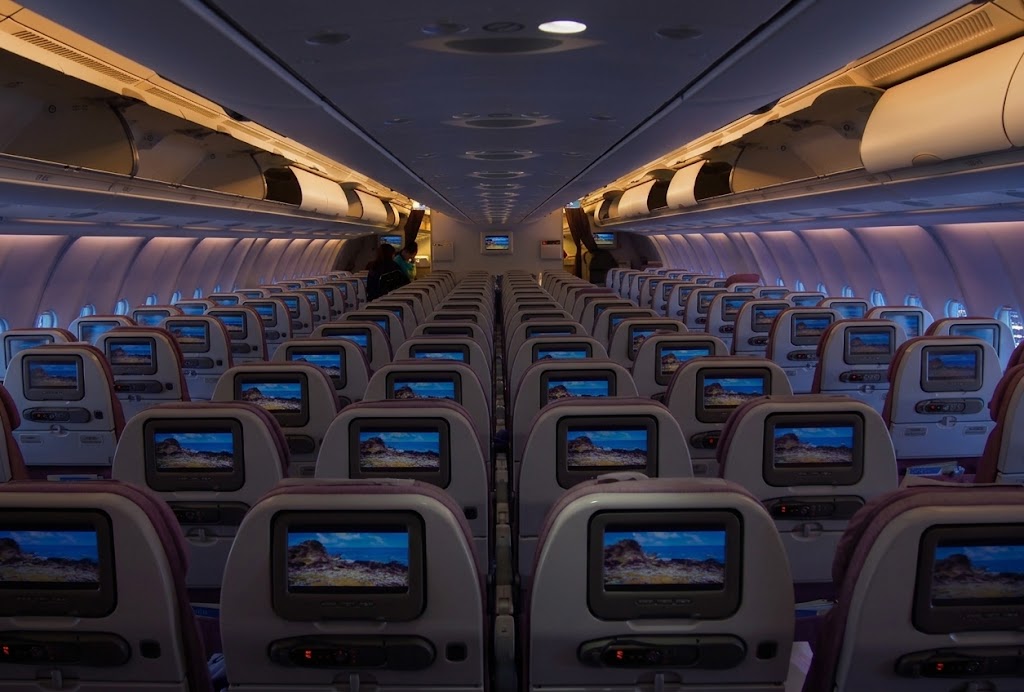
IFE: Seatback, on demand · WiFi: None — on either version
Everyone calls this a version lottery. In economy, it isn't one.
China Airlines operates twelve A330-300s in two configurations — 307 seats and 313 seats — and that difference gets described as a fleet lottery you have to worry about. For the great majority of passengers on this aircraft, it is not.
We compared the two economy cabins seat by seat: all 277 positions, every rating, every flag. They are the same cabin. Same rows 7 to 44, same 2-4-2 layout, same seats rated good, same seats rated avoid, same lavatory positions, same missing windows. Seat 33A is precisely the same proposition on all twelve aircraft.
If you are flying economy on a China Airlines A330-300, stop worrying about which version you have. Pick your seat from the economy section below and an equipment swap cannot hurt you. The whole of the difference between these two aircraft sits in front of the curtain.
In Business, the difference is large — and the odds are against you
Four aircraft carry 30 business seats across five rows. Eight carry 36 across six. Both are 2-2-2. The cabin is the same length in both, so the extra row has to come from somewhere, and it comes out of your pitch.
| 30-seat version | 36-seat version | |
|---|---|---|
| Aircraft | 4 | 8 |
| Total seats | 307 | 313 |
| Business rows | 1–5 | 1–6 |
| Seat type | Angle-flat bed | Recliner |
| Row spacing | Baseline | ~17% tighter |
| Window seats rated "great" | All of them — rows 1–5 | Rows 2, 4, 6 only |
| Typically flown on | Longer sectors | Shorter regional sectors |
The seat type is the headline: the 30-seat version reclines into an angle-flat bed, the 36-seat version is a recliner that does not go flat. On an overnight sector that is the whole game.
The consequence nobody mentions: on the 36-seat version, half the window seats do not line up with a window.
Fit six rows into a cabin built for five and the seats drift out of step with the fuselage windows. On the 30-seat version every single window seat, 1A/1K through 5A/5K, is rated "great" for view. On the 36-seat version only rows 2, 4 and 6 are. Rows 1, 3 and 5 fall between windows and drop to "average". If you are booking a window in business on the denser jet, it has to be row 2, 4 or 6 — and row 6 is the lavatory row, so realistically 2 or 4.
How to tell which one you are on
Count the business rows on the seat map. Five rows, ending at row 5, means the angle-flat version. Six rows, with a row 6 on the map, means the recliner. There is no ambiguity — both cabins start at row 1 and economy starts at row 7 on both, so the only variable is where business stops.
If your booking shows a total seat count, 307 is the angle-flat version and 313 is the recliner. And be realistic about the odds: eight of the twelve aircraft are the 36-seat recliner, so on a random draw you are twice as likely to get the recliner as the bed. The angle-flat aircraft are generally rostered on the longer sectors, which is the direction you would want, but it is a tendency and not a guarantee.
Business — 2-2-2, and D and G are the seats to book
Both versions are 2-2-2: an A B pair by the left window, a D G pair in the centre, a J K pair by the right window. Letters C, H and I do not exist on this aircraft in any cabin.
That layout means only the two window seats in each row, A and K, require climbing over a neighbour. B, D, G and J all sit against an aisle. And the centre pair is the pick: D and G each have an aisle on one side and each other on the other, so neither of you ever climbs over anyone, in either direction, all flight.
Best in Business, either version: 2D and 2G. Rated good, direct aisle access from both seats, no lavatory, no bassinet, and far enough forward to be served first. If you are two people travelling together, this is the pair to take on this aircraft — and it is better than the window pair, not worse.
Row 1 is the bulkhead row and it leads the cabin with extra room ahead, but it is also the bassinet row and is rated caution throughout. Bassinet positions sit at 1A and 1D on both versions, plus 1J on the 30-seat version and 1K on the 36-seat one. 1G is the exception — bulkhead room, direct aisle access, and no bassinet fitted at the seat. It is the one row 1 seat worth having on either aircraft.
Avoid the last row of business. On the 30-seat version that is 5J and 5K; on the 36-seat version, 6J and 6K. Both pairs are rated avoid, sitting immediately against the lavatory at the back of the cabin. It is a curtained cabin so the queuing is modest, but the door is right there.
For a window in business: on the 30-seat version take any of 2A, 2K, 3A, 3K, 4A, 4K or 5A — all rated good with a "great" window. On the 36-seat version you are limited to 2A, 2K, 4A, 4K and 6A, for the alignment reason above. Remember you will be climbing over your neighbour either way.
Economy — 277 seats, 2-4-2, identical on all twelve aircraft
Economy runs rows 7 to 44 in a 2-4-2 layout: A B / D E F G / J K. China Airlines quotes 31 to 32 inches of pitch and 18 inches of width, which is worth pausing on — that is a wider economy seat than the same airline's 777-300ER flagship, which is 3-4-3 at 17 inches. On this aeroplane the regional aircraft has the better economy seat.
2-4-2 is also the friendliest widebody layout there is for pairs: the outer blocks are two seats, so a couple gets a window and an aisle with nobody between or beside them, in any row.
The trap: 12A and 12K
12A and 12K have no window. Not a small window, not a badly aligned one — wall. They sit in the middle of an otherwise unremarkable stretch of cabin, they are rated avoid, and rows 11 and 14 either side of them are completely normal window seats. Nothing on a booking map distinguishes 12A from 11A. This is the single easiest mistake to make on this aircraft.
The best windows: rows 31, 33, 35, 37 and 39
Thirteen seats in economy carry a "great" window rating rather than "average". Ten of them are the clean picks — 31A, 31K, 33A, 33K, 35A, 35K, 37A, 37K, 39A and 39K, odd-numbered rows through the rear cabin, all rated good and all at ordinary economy prices. 41K and 43K are two more, back in the tapered tail, and they come with the bonus described below.
The thirteenth is 41A, and it is the one to leave — it has the same perfectly aligned window as its neighbours and it is rated avoid, because it sits hard against the rear lavatory. A great window is not worth that. Going the other way, 24A, 24K, 28A and 28K have windows set behind the seat, so you lean back to look out.
The exit row is asymmetric — 27A is good, 27K is not
Row 27 is the exit row and every seat in it gets extra legroom, at the cost of no underseat storage and a tray table in the armrest. But the two sides are not equivalent:
27K has door R3 curving into its legroom from about 50cm ahead, so you extend your legs diagonally rather than straight. It is not fatal — the payoff is that nothing reclines into you at all — but it is a real compromise. 27A has no such intrusion. Same extra legroom, same row, clean floor. If you are choosing a window in the exit row, take the left side.
In the centre block, 27D, 27E, 27F and 27G all have the legroom, with bassinet positions at 27E and 27F and lavatory traffic ahead of the whole block. 27A, 27B and 27J are the cleanest seats in the row.
Row 7 is the other extra-legroom row — a four-seat partial row at the front of economy, 7A, 7B, 7J and 7K only, with no centre block. Extra legroom, no underseat storage. Row 8's centre block (8D, 8E, 8F, 8G) is the corresponding bulkhead, with bassinets at 8D and 8G.
The hidden gem at the back: 43K
The fuselage tapers at the tail, so the rear rows lose seats and a few passengers end up with an empty space beside them. 43K collects three things at once: a "great" window rating, no seat next to it (the adjacent underseat storage is yours), and direct aisle access. 43J, 42K, 41G and 40G also have no seat beside them. These are ordinary economy seats and they are the closest thing to a free upgrade on the aircraft — just note the rear lavatories are close, and 43D, 43E, 44D and 44E are rated avoid for exactly that reason.
Economy seats to avoid
Rows 25 and 26 are the worst block on the aircraft — fourteen seats, every one rated avoid, all immediately against the mid-cabin lavatories. Row 26 is a partial row with no A or B. Row 24 is rated caution for the same lavatories one row further forward, and 24A and 24K have the misaligned window on top. At the very back, 41A, 41B, 42D, 43D, 43E, 44D and 44E are all rated avoid against the rear lavatories, and row 44 is a three-seat partial row.
Quick picks by traveller
| If you are… | Book | Why |
|---|---|---|
| In Business, either version | 2D or 2G | Aisle access without climbing, no lavatory, no bassinet |
| After a Business window, 30-seat jet | 2A, 3A, 4A or 5A | Every window row is well aligned on this version |
| After a Business window, 36-seat jet | 2A, 2K, 4A or 4K | Only the even rows line up with a window |
| A couple in Economy | 33A+33B or 35J+35K | 2-4-2 outer pair with a "great" window, no stranger |
| Solo and want a window | 31A, 37K or 39A | Rated "great" alignment, well clear of the lavatories |
| After legroom in Economy | 27A or 27B | Exit row without the door intrusion that 27K has |
| Wanting space beside you | 43K | No seat alongside, great window, direct aisle access |
| A family of four | D E F G, rows 29–39 | Four across, clear of both lavatory blocks |
| Travelling with an infant | 8D, 8G, 27E or 27F | Bassinet positions with bulkhead floor space |
| Working and need WiFi | A different aircraft | Neither A330-300 version has WiFi at all |
Frequently asked questions
Does it matter which A330-300 version I get?
In business, very much: one is an angle-flat bed and the other is a recliner. In economy, no — the 277-seat economy cabin is identical on all twelve aircraft, right down to which individual seats are rated good and bad. If you are in economy you can pick your seat from this guide without knowing which version you are on.
How do I tell which version I am booked on?
Count the business rows on the seat map. Five rows means 30 seats and the angle-flat bed; six rows means 36 seats and the recliner. Total seat counts are 307 and 313 respectively. Eight of the twelve aircraft are the 36-seat recliner version.
Is the A330-300 business seat lie-flat?
Only on four of the twelve aircraft, and even then it is angle-flat rather than fully flat — the bed reclines to a slope rather than horizontal. The other eight aircraft have recliner seats that do not approach flat at all. If a genuinely flat bed matters, China Airlines' 777-300ER and A350-900 both have fully flat seats with direct aisle access for every passenger.
Does the A330-300 have WiFi?
No. Neither version is fitted with it. This is the one China Airlines widebody with no connectivity at all, so if you need to work in the air, check the aircraft type before you book — the 777-300ER has Panasonic Ka-band and the A321neo has Inmarsat GX.
Which economy seats have no window?
12A and 12K, and only those two. They are mid-cabin, they look ordinary on a seat map, and they are rated avoid. Separately, 24A, 24K, 28A and 28K have windows set behind the seat, which restricts the view without removing it.
Is economy on the A330 better or worse than the 777?
Wider, on paper. The A330-300 is 2-4-2 at 18 inches; the 777-300ER is 3-4-3 at 17. The A330 also gives couples a true two-seat pair on either side, which the 777 only offers in its last three rows. The 777 wins on WiFi, on the premium cabins, and on route length. For a short regional sector in economy, the A330 is the more comfortable seat.