ANA A321neo Seat Selection Guide (2026)
✈️ Quick Verdict
Aircraft: Airbus A321neo — 24 aircraft
Configuration: one only — 8 Premium Class, 186 economy, 194 total
Layout: Premium Class 2-2 (A–C / H–K), rows 1–2. Economy 3-3 (A–B–C / H–J–K), rows 5–37, with five rows cut short by the door surrounds.
Version lottery: No — a single configuration across the fleet.
Best seats: 10B, 10J and 23J — middle seats with no neighbour and an open strip of floor beside them. Then rows 12 and 25 for extra legroom.
Seats to avoid: 37A — no window and the lavatory behind. 24K, which carries the extra legroom against a window that does not line up. 9B and 9J, which lose their recline to the exit behind.
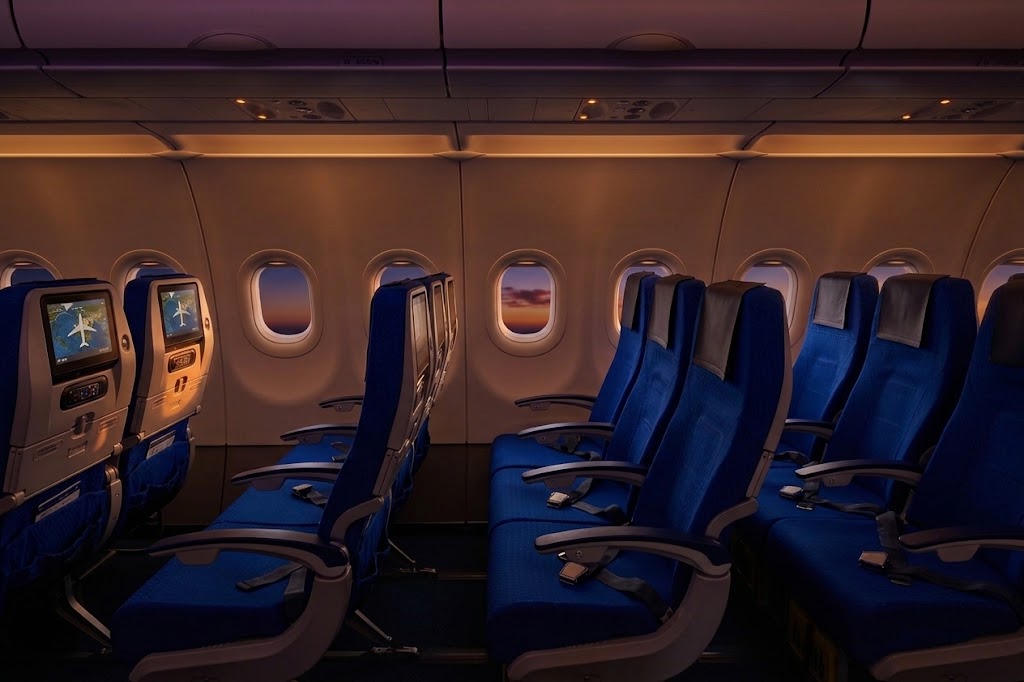
IFE: Safran RAVE seatback screens, on demand — the only ANA narrowbody with them.
Wi-Fi: Panasonic eXConnect Ku-band, fleet-wide.
The doors are the whole story
An A321neo needs more emergency exits than an A320, and ANA has placed them so that the left-hand and right-hand exits sit at slightly different points along the fuselage. The result is five rows in economy that are not six seats wide.
| Row | Seats in it | What that does |
|---|---|---|
| 10 | B, C, H, J — no A, no K | 10B and 10J have the window position empty beside them |
| 11 | H, J, K — no A, B or C | Extra legroom, facing the exit corridor |
| 23 | A, B, C, H, J — no K | 23J has the window position empty beside it |
| 24 | H, J, K — no A, B or C | Extra legroom, facing the rear exit corridor |
| 37 | A, B, C only | The tail. Lavatory behind, and 37A has no window |
The finding: three middle seats better than the windows. 10B, 10J and 23J are lettered as middle seats, priced as middle seats, and picked last by everyone reading the map quickly. But the seat that would normally sit beside them — the window seat — does not exist, because the door surround occupies that space. All three have no seat alongside, an open strip of floor, and the neighbouring underseat storage. On a 194-seat narrowbody these are the six square feet worth having, and they are usually still available.
The same cut-outs leave 10C, 10H and 23H sitting in a block of two rather than three — one neighbour to climb past instead of two — which is a milder version of the same benefit. Six seats in a 186-seat cabin gain something from the doors; that is about three per cent of economy.
Premium Class
Eight seats in two rows of 2-2 — A and C on the left, H and K on the right — with fixed armrests throughout. As on ANA's 737-800, the 2-2 layout means no middle seats and a genuine pair for two people travelling together.
- Best: 1A and 1C. Both lead the cabin with open floor ahead, and neither has the forward galley beside it.
- 1H and 1K have the same bulkhead legroom but sit against the forward galley — expect light and movement during the service.
- Row 2 is the quieter row if you would rather have a seatback in front of you and somewhere to put a bag.
- Windows: 1A and 1K each get two windows, and so do 2A and 2K. What separates the left pair from the right in row 1 is the galley, not the view.
Economy, row by row
186 seats in 3-3 from row 5 to row 37. Around 35% of the cabin has direct aisle access, slightly better than a plain 3-3 because of the short rows.
The seats worth going out of your way for
- 10B and 10J — the best economy seats on the aircraft. No seat beside you, an open strip of floor where the window seat would be, the neighbouring underseat space, and direct aisle access on the other side.
- 23J — the same arrangement at the rear exit. One seat, easy to miss.
- 12A, 12B and 12C — extra legroom facing the forward exit corridor, with no seatback ahead. The trade is no underseat storage and both the tray table and the screen in the armrest.
- 25A, 25B and 25C — the same at the rear corridor.
- 11H, 11J and 11K — extra legroom on the right-hand side of the forward corridor.
- 24H and 24J — extra legroom at the rear corridor. Note that 24K is the same row with a misaligned window; see below.
- 10C, 10H and 23H — aisle seats in a two-seat block rather than a three. One neighbour to your inboard side instead of two, and the aisle on the other.
- 30K and 31A — the two best-aligned windows in the rear cabin.
- Row 5 — the forward bulkhead, extra legroom at all six seats, screens in the armrests. 5H does best, with a partial bulkhead leaving open floor on the aisle side.
The seats to leave
24K is the trap. It sits in an extra-legroom row, in the window position, and it is the seat most people in that row would pick first. But the window is set behind it, so you lean back to see out — and unlike its neighbours 24H and 24J, that is the one thing you cannot fix by sitting somewhere else in the same row. Take 24H or 24J instead and you keep everything and lose nothing.
- 37A — the worst seat on the aircraft. Last row, three seats wide, no window at all, and the lavatory immediately behind.
- 37B and 37C — the rest of that row. 37C also has the galley behind it.
- 9B and 9J — the row ahead of the forward exit. Standard legroom, and neither seat fully reclines because the escape path behind has to stay clear.
- 36C, 36H, 36J and 36K — galley immediately behind. 36K also has the window ahead of the seat rather than beside it.
- 12K, 13A, 14K, 16A, 17A, 29K and 30A — windows set behind the seat.
- Row 5 if you want a bag at your feet — the bulkhead means no underseat storage, and the armrest-mounted screen narrows the seat.
The one ANA narrowbody with seatback screens
This is the practical difference between booking an A321neo and a 737-800 on the same ANA route. The A321neo carries the Safran RAVE system with on-demand content at every seat. The 737-800 has no seatback screens at all — content is streamed to your own device over the Wi-Fi. Both aircraft carry the same Panasonic eXConnect Ku-band connectivity, so the difference is the screen, not the signal.
| A321neo | 737-800 | |
|---|---|---|
| Total seats | 194 | 166 |
| Premium Class | 8, rows 1–2, 2-2 | 8, rows 1–2, 2-2 |
| Economy | 186, rows 5–37 | 158, rows 5–31 |
| Seatback screens | Yes — Safran RAVE | No — streamed to your device |
| Seats with no neighbour | 10B, 10J, 23J | 31K only |
| Best economy row | 12 or 25 | 15 |
Quick-pick summary
| If you are… | Take | Why |
|---|---|---|
| Solo, want space | 10B, 10J or 23J | No seat beside you, open floor, spare underseat storage |
| Tall | 12C or 25C | Extra legroom, no seatback ahead, aisle to stretch into |
| A couple | 1A + 1C in Premium Class | A true pair, bulkhead, no galley alongside |
| After the view | 30K or 31A | The two properly aligned windows in the rear cabin |
| Off the aircraft fastest | 5C or 6C | First aisle seats behind the Premium Class curtain |
| Watching something | Anywhere except rows 5, 11, 12, 24, 25 | Those rows have the screen in the armrest, not the seatback |
| Travelling with a child | Rows 18–22 | Full-width rows, mid-cabin, no exit-row age restriction |
| Booking on price alone | Anything 18–35; skip 36 and 37 | The mid-cabin rows carry no flags at all |
Comparable guides
- ANA 737-800 — the smaller ANA narrowbody, without seatback screens
- ANA 787-10 — the 429-seat domestic widebody on the trunk routes
- JAL 737-800 — the competing narrowbody, in three configurations
- ANA 787-8 — the widebody on medium domestic sectors
- ANA 787-9 — the long-haul cabin
Frequently asked questions
Why do rows 10, 11, 23 and 24 have fewer than six seats?
The A321neo carries additional overwing exits, and ANA has positioned the left-hand and right-hand doors slightly offset from one another. Where a door surround occupies a seat position, that seat is simply not fitted. Row 10 loses A and K, row 11 loses A, B and C, row 23 loses K, and row 24 loses A, B and C. The seats that survive next to those gaps are the best in the cabin.
Which ANA A321neo seat has the most legroom?
Rows 11, 12, 24 and 25 all face an exit corridor with no seatback in front, and every seat in them carries extra legroom. Row 5, the forward bulkhead, has it too. The trade in all of them is the same: no underseat storage, and both tray table and screen mounted in the armrest, which narrows the seat you sit in.
Does the ANA A321neo have seatback screens?
Yes — the Safran RAVE system, screening audio-visual content on demand. It is the only ANA narrowbody that has them; the 737-800 streams to your own device instead. In the extra-legroom rows the screen is mounted in the armrest rather than in a seatback, because there is no seatback in front of you.
Is there a seat with nobody next to it?
Three: 10B, 10J and 23J. All three are lettered as middle seats, but the window position beside each of them is taken up by a door surround and never fitted with a seat. All three have open side space and the neighbouring underseat storage. They are the best economy seats on the aircraft and they price like middle seats.
What is the worst seat on the ANA A321neo?
37A. It is in the last row, which is only three seats wide, it has no window at all — wall only — and the lavatory is immediately behind it. 24K is the more expensive mistake, though, because it looks like the prize seat of an extra-legroom row and has a window that does not line up with it.
Are all ANA A321neos the same inside?
Yes. There is a single 8 + 186 configuration across all 24 aircraft. ANA also operates a smaller A320neo fleet, which is a different aircraft with a different seat count, so check the type on your booking rather than assuming the A321neo layout applies.