United Airlines Boeing 737-800 Seat Selection Guide (2026)
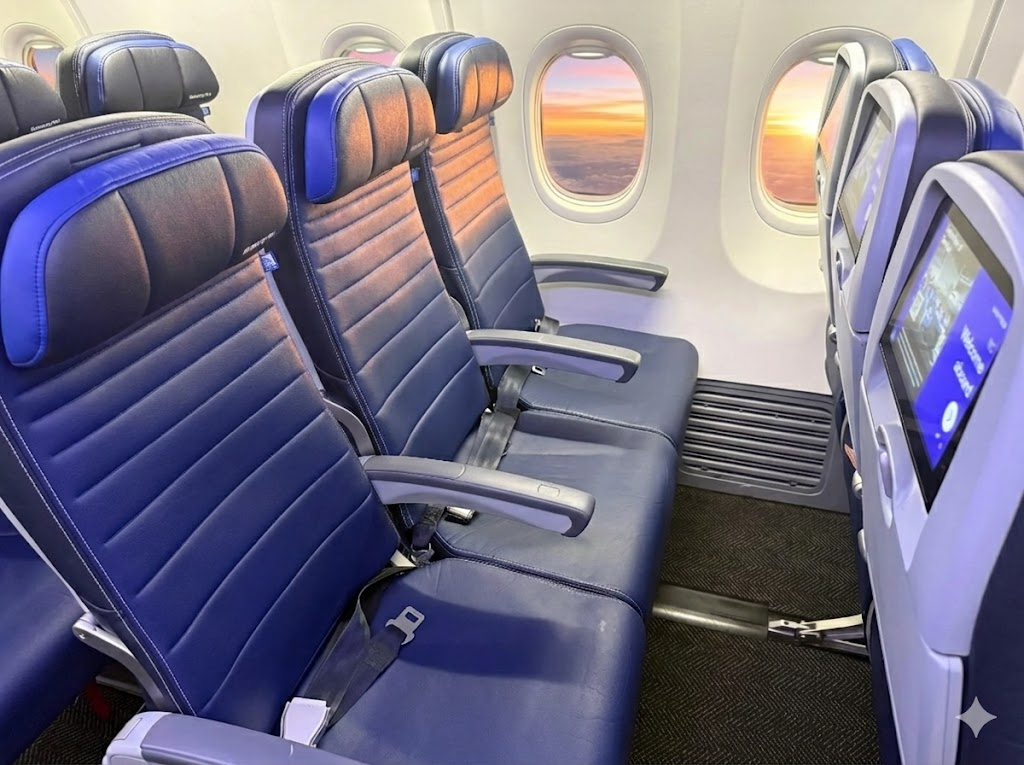
United's 737-800 is the airline's domestic workhorse — 141 aircraft averaging 21.7 years old, operating the backbone of United's short- and medium-haul network. It carries 166 passengers in three classes: 16 First, up to 54 Economy Plus, and the rest in Economy.
This fleet is in the middle of a major transformation. Most 737-800s still fly with pre-retrofit interiors featuring DIRECTV screens (or no screens at all), but United is progressively rolling out its Signature Interior with modern seatback entertainment, larger bins, and new First Class seats. The 737-800 was also the first mainline type to receive Starlink WiFi (October 2025), which is spreading across the fleet at roughly 15 aircraft per month.
The version lottery is real. There are two main domestic configurations that differ in Economy Plus seat count (48 vs 54 seats), which shifts where Economy begins. There's also a small Micronesia subfleet with a different layout entirely. And within each version, the interior can range from ancient Continental-era cabins to fully retrofitted Signature aircraft. Always check your specific seat map after booking.
Key detail: Row 7 (first row of Economy Plus) has a partial-height bulkhead on most aircraft, giving excellent legroom and underseat storage. But on some older ex-Continental aircraft, the bulkhead extends to the floor — eliminating the legroom advantage entirely. This is the biggest seat lottery on the aircraft.
Quick Verdict
| Cabin | Rows | Seats | Pitch | Width | Recline |
|---|---|---|---|---|---|
| First Class | 1–4 | 16 | 36.7" | 20" | 5" |
| Economy Plus | 7–19 (varies) | 48 or 54 | 33–34.5" (38.8" at rows 20–21) | 17" | 3" |
| Economy | Varies–38 | 96 or 102 | 30" | 17" | 2" |
The Two Main Versions
Both versions carry 166 passengers with the same First Class cabin. The difference is how Economy Plus and Economy seats are distributed.
Version 1 (48 Economy Plus) — Type 73Q/73Y
- Configuration: 16F + 48 E+ + 102 Economy = 166 seats
- Economy Plus pitch: 34.5" standard, 38.8" at exit rows 20–21
- Economy rows: More Economy rows (typically through row 38)
- Key difference: Row 15 does not recline; row 20 does not recline
This is the more common version with slightly more generous Economy Plus pitch at 34.5" — roughly an inch more than Version 2.
Version 2 (54 Economy Plus) — Type 73Q/73Y
- Configuration: 16F + 54 E+ + 96 Economy = 166 seats
- Economy Plus pitch: 33.2" standard, 38.8" at exit rows 20–21
- Economy rows: Fewer Economy rows (typically through row 38)
- Key difference: Rows 15 and 20 do not recline
This version has six more Economy Plus seats, but the E+ pitch drops to 33.2" — still better than the 30" Economy seats but noticeably tighter than Version 1's 34.5".
How to tell which version you have
Check your seat map on united.com after booking. Count the Economy Plus rows (shown in a different colour). If Economy Plus runs further back (more blue rows), you likely have Version 2 with 54 E+ seats.
Best Seats
First Class
Best: 1A or 1B — The bulkhead in front of row 1 has a cutout on the A/B side, giving meaningfully more legroom than 1E/1F. Seat 1B is widely considered the single best First Class seat on the aircraft because of this cutout. Both seats have fixed armrests with tray tables (slightly narrower), no underseat storage during takeoff/landing, and no footrests — but the legroom advantage more than compensates.
Solid choice: 2A/2F — Standard First seats with full legroom, recline, and underseat storage. No bulkhead compromises. Good all-rounders if row 1 isn't available.
Acceptable: Rows 2–3 centre (2C/2D, 3C/3D) — Aisle seats with standard First amenities. Functional for short flights.
Economy Plus
Best: 21B/21C and 21D/21E — Widely considered the best Economy seats on the entire aircraft. These exit-row centre seats have 38.8" pitch (more legroom than First Class), the person in front can't recline into your space, and unlike the 21A/21F window seats, they don't have the awkward short armrest attached to the exit door. On Version 1, they recline normally.
Excellent: 7D/7E/7F — On aircraft where the bulkhead doesn't extend to the floor (most of the fleet), row 7 has outstanding legroom — you can stretch your feet under the partial-height partition and store bags underneath. The right-side seats (D/E/F) are preferable to A/B/C because they're further from the forward lavatory. Armrests are fixed with bi-fold tray tables (slightly narrower seat width). No underseat storage during takeoff/landing.
Very good: 21A/21F — Exit row windows with 38.8" pitch. The trade-off: a shorter armrest that's attached to the exit door and a thinner seat cushion. Some passengers find this uncomfortable; others don't notice. Still excellent for legroom.
Good: Row 20 (all seats) — Exit row with 38.8" pitch, but seats do NOT recline. Best for short flights where you prioritise legroom over recline. No underseat storage during takeoff/landing.
Good: Rows 8–9 — Standard Economy Plus with 33–34.5" pitch (version-dependent), full recline, and underseat storage. Solid, unremarkable choices.
Economy
Best: Row 22 or 23 — First rows of Economy on most versions. Close to exit rows without being in them (so you keep underseat storage and recline). Proximity to mid-cabin exit means faster deplaning than rear Economy.
Seats to Avoid
First Class
Row 4 (especially ex-Continental aircraft): The last row of First has a bulkhead wall behind it. On some aircraft, row 4 has severely limited or zero recline. This is a known issue on older ex-Continental 737-800s. If you value recline, avoid row 4 unless you can confirm the specific aircraft has been retrofitted.
1E/1F: Less legroom than 1A/1B because there's no bulkhead cutout on this side. The tray tables are in the fixed armrests, making the seats slightly narrower. Not terrible, but noticeably worse than 1A/1B.
Economy Plus
Row 7 (on some aircraft): On most 737-800s, the partition ahead of row 7 is partial height — great legroom. But on some older aircraft, the bulkhead extends to the floor, making row 7 among the worst Economy seats on the plane despite being sold as Economy Plus. You won't know until you board. If you get a full-height bulkhead, you've been hit by the 737-800 seat lottery.
10A/10F: Misaligned windows. You'll have a window, but it won't be centred — the frame cuts into your shoulder space and blocks much of the view.
11A/11F and 12A/12F: NO WINDOWS. These seats are sold as window seats but have blank fuselage wall where the windows should be, due to air conditioning duct placement. This is a well-documented 737 design issue. Avoid if you want a view.
Row 15: Does not recline due to the exit row behind it. Fine for a short hop but uncomfortable on anything over 2 hours.
Row 20 (if you need recline): Despite the excellent 38.8" legroom, these seats do not recline. They're between two exit rows. Great for daytime flights; avoid on redeyes.
Economy
Row 38 (last row): Limited recline, directly adjacent to the rear lavatories and galley. Constant foot traffic, noise from lav doors, and you'll be last off the plane. The classic worst-row-on-the-plane scenario.
Rows 35–37: Reduced seat width due to fuselage tapering toward the tail. Row 37 also suffers from proximity to the lavatories and galley.
Row 23 (on some aircraft): Entertainment equipment is stored in the overhead bins above this row, reducing your bin space and creating noise when the equipment is active.
Lavatory Warning
The 737-800 has just three lavatories: one forward (between First and Economy Plus) and two at the rear. That means approximately 150 Economy passengers share just two lavatories — a ratio that generates frequent complaints, especially on flights over 3 hours. The rear galley area around rows 36–38 becomes a standing zone as passengers queue. This is a significant reason to avoid the last few rows.
Interior Lottery: Pre-Retrofit vs Signature
Your 737-800 experience varies dramatically depending on which interior you get.
Pre-Retrofit (majority of fleet as of early 2026)
Most United 737-800s still have their original interiors — many dating back to Continental Airlines before the 2010 merger. These feature:
- IFE: Old DIRECTV LiveTV screens (small, dated) or in some cases, no seatback screens at all — streaming only via the United app on your own device
- Power: AC outlets (110V) in First and Economy Plus only. Economy has NO power outlets
- WiFi: ViaSat KA-band (paid, or free for T-Mobile customers) — being replaced by Starlink
- Seats: Original Collins Aerospace Pinnacle seats with 4-way adjustable headrest and tablet holder
- Bins: Standard overhead bins (tight fit)
Signature Interior (Retrofitted — small but growing number)
United's "United Next" retrofit program is transforming the 737-800 fleet, though progress has been slower than planned (originally targeted for completion in 2025, now expected 2026–2027). Retrofitted aircraft feature:
- IFE: New HD seatback screens at every seat — 13" in First, 10" in Economy — with Bluetooth audio connectivity (pair your AirPods)
- Power: USB-A and USB-C at every seat (including Economy), plus AC outlets in First and Economy Plus
- Seats: New First Class seat with articulating cradle design, privacy dividers, and wireless charging under the centre armrest. Hardshell seatback so recline doesn't intrude on the person behind
- Bins: New Boeing Space Bins with 1:1 passenger-to-carry-on capacity
- Overall: Dramatically improved experience. Same seat count and pitch, but feels like a different aircraft
Starlink WiFi (Rolling Out)
The 737-800 was United's first mainline aircraft type certified for SpaceX Starlink (September 2025). The first commercial Starlink 737-800 flight operated on October 15, 2025, from Newark to Houston.
- Speed: 250–400 Mbps download, 15–50 Mbps upload — fast enough for live streaming and video calls
- Price: Free for MileagePlus members (free to join)
- Rollout pace: Up to 15 aircraft per month. By end of 2026, United expects 800+ total aircraft with Starlink (across all types)
- How to check: Look for the Starlink banner on united.com flight status before your flight
Best Seats by Traveller Type
| Traveller | Target | Why |
|---|---|---|
| Solo business | 1A or 1B (First); 7D or 8D (E+) | 1B cutout legroom; 7D great legroom + aisle for quick deplane |
| Couple | 2A/2C or 3A/3C (First); 8A/8B (E+) | Paired seating with best First experience; E+ rows 8–9 are reliable |
| Window lover | 2A or 3A (First); 8A or 9A (E+) | Avoid 10A/10F (misaligned), 11A/11F and 12A/12F (no windows) |
| Legroom priority | 21B/21C (E+) | 38.8" pitch — more than First Class, full recline on V1 |
| Families | Rows 8–9 (E+); 22–24 (Economy) | Mid-cabin, away from exit rows (kids can't sit there) |
| Budget (Economy) | Rows 22–24 | First Economy rows — best deplaning, away from rear lavs |
Key Facts
| IATA code | 738 (types 73Q, 73Y) |
| Fleet size | 141 aircraft |
| Average age | 21.7 years |
| Engines | CFM56-7B |
| Total seats | 166 |
| First Class | 16 seats (rows 1–4), 2-2 |
| Economy Plus | 48 or 54 seats, 3-3 |
| Economy | 96 or 102 seats, 3-3 |
| Seat width (E/E+) | 17" |
| Seat width (First) | 20" |
| Power (First/E+) | AC 110V outlets |
| Power (Economy) | None (pre-retrofit); USB-A/C (Signature retrofit) |
| WiFi | ViaSat KA-band → Starlink (rolling out from Oct 2025) |
| IFE | DIRECTV/streaming (pre-retrofit); HD seatback screens (Signature) |
| Lavatories | 3 (1 forward, 2 rear) |
How to Check Your Aircraft Interior
- At booking: Go to united.com → select your flight → check "Details" for aircraft type (Boeing 737-800)
- Seat map clue: Count Economy Plus rows. 48 E+ = Version 1 (better pitch). 54 E+ = Version 2
- Before departure: Check united.com flight status for Starlink WiFi banner
- Interior age: If the seat map shows DIRECTV screens or there are credit card slots beside the screen, you have a pre-retrofit interior. New HD touchscreens with Bluetooth = Signature Interior
- Tail number: Track specific aircraft via FlightAware if you want to research interior status
Compared to Other United Narrowbodies
737 MAX 8: Newer aircraft (avg 2.8 years), guaranteed Signature Interior with seatback screens and USB power at every seat, same 166-seat / 3-class layout. If you have a choice between a 737-800 and a MAX 8 on the same route, take the MAX 8 every time — it's the same seating layout but a dramatically better cabin.
737-900ER: Stretched fuselage with more seats (up to 179). Similar interior lottery. Row 5 in First is an oddity — check for recline issues.
A321neo: United's newest narrowbody. All-new Signature Interior standard, more total seats, wider cabin feel than any 737. Preferable when available.
FAQ
Does Economy have power outlets?
On pre-retrofit aircraft (most of the fleet): No. Economy has no power whatsoever. First and Economy Plus have AC outlets. On Signature-retrofitted aircraft: USB-A and USB-C at every seat, including Economy.
Is Economy Plus worth it?
On the 737-800, yes — especially rows 7 (if you get the good bulkhead) and 20–21 (exit rows). The pitch difference of 3–4.5" over Economy is noticeable, and the AC power outlet access is valuable on pre-retrofit aircraft where Economy has none.
Which is the best row for a quick exit?
Row 1 in First; row 7 in Economy Plus; row 21 in Economy Plus (over-wing exit). In Economy, the further forward the better.
How can I avoid a 737-800?
Look for MAX 8, MAX 9, or A321neo when booking. These are listed by aircraft type on united.com. The 737-800 (shown as "738") is being gradually replaced but remains extremely common on domestic routes.
Why are rows 11 and 12 window seats terrible?
The Boeing 737 has air conditioning ducts that run through the fuselage at this location, blocking the window openings. It's a design feature of the 737 since the NG series — not unique to United. The seats are still sold as "window" seats at window-seat prices, which understandably frustrates passengers.