Flying with Children: The 10 Most Common Questions Answered (2026)
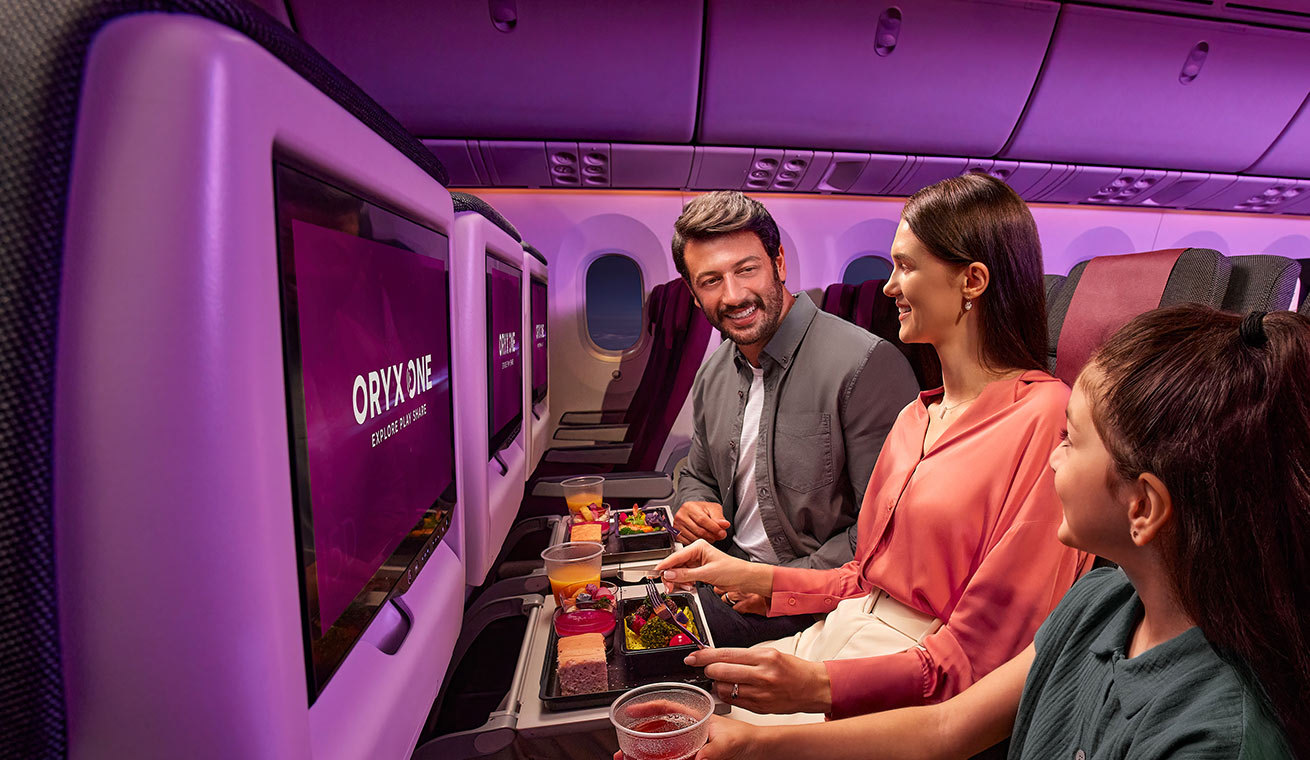
Flying with children doesn't have to be stressful — but the sheer number of rules, policies, and variables can make even seasoned travellers feel like first-timers. Between airline-specific age limits, bassinet weight restrictions, and figuring out which seats actually work for families, there's a lot to navigate before you even get to the gate.
We've compiled the ten questions parents ask most often — drawing on airline policies, FAA guidance, and our own seat data across 300+ aircraft guides — so you can spend less time worrying and more time planning a trip your family will actually enjoy.
1. Does my baby need their own ticket?
This is the single most common question for first-time flying parents, and the answer depends on age, route, and airline.
Domestic flights (US): Children under 2 can fly free as a "lap infant" on most US airlines. You won't buy a separate ticket, but you will need a boarding pass — most airlines require you to call reservations or add the infant at check-in. Proof of age (birth certificate or passport) is almost always required.
International flights: Most airlines charge approximately 10% of the adult fare for a lap infant on international routes, plus applicable taxes. This can add up quickly on premium cabin tickets.
Key rules to know:
- One lap infant per ticketed adult — if you're travelling solo with twins, you must purchase a seat for at least one child
- Lap infants cannot sit in exit rows or in seats with airbag seatbelts (typically row 1 on many aircraft)
- Only one lap infant is typically permitted per seating section (e.g. one side of a three-seat row) due to oxygen mask limitations
- On the child's second birthday, they must have their own purchased seat
The safety angle: While lap travel is permitted, both the FAA and the American Academy of Pediatrics strongly recommend purchasing a seat and using an FAA-approved car seat or the CARES harness for children under 2. Turbulence is the leading cause of in-flight injuries to children.
2. What are the best seats for families with young children?
This is where seat selection becomes genuinely important — and where generic advice often falls short. The best seat depends on your child's age, your aircraft type, and your family size.
With an infant (under 2):
- Bulkhead rows are ideal for long-haul flights — they offer extra legroom and are where bassinets mount. On widebody aircraft, the centre bulkhead section (typically D/E/F/G) usually accommodates two bassinets
- Window seats are better for breastfeeding or bottle-feeding privacy, and for containing a wiggly lap infant
- Avoid Row 1 on many aircraft — these seats often have airbag seatbelts that are incompatible with lap infants
With toddlers (2–5):
- Window seats help contain children and provide entertainment (they can look outside and control the shade)
- On 3-3 narrowbody aircraft (737, A320), book a window and middle seat — leave the aisle for the parent
- On widebody 2-4-2 aircraft (767, A330), pairs of two seats eliminate the middle-seat problem entirely
- Avoid the last few rows — proximity to lavatories sounds convenient but means constant foot traffic, noise, and galley smells
With older children (6+):
- Exit rows are off-limits for anyone under 15 — flight attendants will enforce this
- For families of four on 3-3 aircraft, consider booking a window-middle pair in two consecutive rows rather than fighting for a full row of four
- On widebody 3-4-3 aircraft (777, A350), the centre four seats work brilliantly for families — parents on the aisles, children in the middle
SeatCompare tip: Our seat guides flag bassinet positions, seats with airbag belts, and limited-recline rows for every aircraft we cover. Search your specific flight to see which seats work best for your family configuration.
3. How do airline bassinets work, and how do I get one?
Airline bassinets (also called skycots) are small beds that attach to the bulkhead wall in front of your seat. They're a genuine lifesaver on long-haul flights — but availability is limited and policies vary wildly between airlines.
The basics:
- Bassinets are typically available on widebody aircraft only (777, 787, A330, A350, A380) — you won't find them on 737s or A320s
- Most airlines restrict bassinets to infants under 20–25 lbs (9–11 kg) and under 26 inches (66 cm) long
- They're generally available in Economy and sometimes Premium Economy; some airlines offer built-in bassinets in Business Class
- Bassinets are almost always first-come, first-served — request early but understand they're never guaranteed
How to request one:
- Book your flight and note the aircraft type (not sure how to check? →)
- Call the airline immediately to request a bassinet and confirm your seat is in a bassinet-compatible bulkhead row
- Check again closer to departure — aircraft swaps can change your seat and bassinet availability
- Arrive early and confirm with the gate agent before boarding
Airline-specific highlights:
- Emirates, Singapore Airlines, and Qatar Airways offer some of the largest bassinets in the industry
- British Airways has two styles: a lie-flat bassinet and a recliner-style seat for older babies
- Virgin Atlantic and Qantas uniquely allow babies to remain strapped in the bassinet during turbulence on some aircraft
- JetBlue, Alaska Airlines, and most US LCCs do not offer bassinets at all
- American Airlines only offers bassinets on 777-200, 777-300ER, and 787 aircraft in Economy
Important trade-offs of bulkhead seats:
- All bags must be stowed in overhead bins during takeoff and landing — no under-seat storage
- Armrests are often fixed (the tray table folds out of them), which means your child can't lie across your lap as easily
- You're close to galleys and lavatories, which means more noise and foot traffic
4. Will my family be seated together?
This is a source of enormous anxiety for parents — and the rules are evolving quickly.
Current US airline guarantees (as of 2026):
Several major US airlines now guarantee that children will be seated next to at least one accompanying adult at no extra charge:
- Alaska Airlines: Children under 13 guaranteed adjacent to an adult
- American Airlines: Children under 15 next to at least one adult
- United Airlines: Children under 12 seated with an accompanying adult
- JetBlue: Children under 13 next to a parent or adult
- Frontier: Children under 14 with at least one parent
Delta and Southwest have less explicit guarantees, though both airlines generally work to accommodate families.
The DOT is actively pursuing a federal rule that would require all US airlines to seat children 13 and under with an accompanying adult at no additional cost.
Practical tips:
- Book everyone on the same reservation — this is the single most important thing you can do
- Select seats at booking, even if it means paying a small fee — it's far cheaper than the stress of being separated
- If you can't select seats, airlines typically auto-assign family seating 24 hours before departure for Basic Economy fares
- Monitor your seats in the days before travel — aircraft swaps can silently change your assignments
- If separated at the gate, speak to the gate agent calmly and early — they can usually resolve it
5. How do I help my child with ear pressure during takeoff and landing?
Ear pain (barotrauma) during altitude changes is one of the most common causes of in-flight crying — and children are especially susceptible because their Eustachian tubes are narrower and less efficient than adults'.
For babies and infants:
- Breastfeed or bottle-feed during takeoff and landing — the swallowing motion helps equalise pressure
- Offer a pacifier if feeding isn't possible
- Keep baby upright to help with ear drainage
- Time feeds strategically: if your baby is due for a feed around departure, try to hold off until you're actually on the runway
For toddlers and older children:
- Chewing gum or sucking on hard candy (age 3+) promotes the swallowing that equalises pressure
- Sipping water through a straw works well
- Teach older children the Valsalva manoeuvre: gently pinching their nose and blowing with mouth closed
- Children's ibuprofen or paracetamol given 30 minutes before takeoff can help if your child is prone to ear pain
Critical advice: Don't let children sleep during takeoff and landing — we swallow less during sleep, making pressure harder to equalise. Gently wake them before descent begins. If your child has a cold, ear infection, or significant congestion, consult your paediatrician before flying — the discomfort can be severe.
Children with ear tubes (grommets) generally have no problems with pressure changes.
6. Can I bring a car seat on the plane?
Yes — and safety experts strongly recommend it for children under 40 lbs.
The rules:
- The car seat must be FAA-approved and labelled "This restraint is certified for use in motor vehicles and aircraft"
- You must purchase a separate seat for the child to use a car seat
- Car seats should be installed in a window seat (most airlines require this for emergency evacuation reasons)
- Car seats are not permitted in exit rows
- The CARES harness is an FAA-approved alternative for children weighing 22–44 lbs and under 40 inches tall — it's lightweight and fits in a carry-on
Practical considerations:
- Car seats must be no wider than 16 inches to fit in most aircraft seats — check your seat's width against our guides before you fly
- Rear-facing car seats are permitted on aircraft and should be used for children under 20 lbs
- Car seats cannot be used in lie-flat Business Class seats on many widebody aircraft
- All airlines allow you to check car seats and strollers free of charge, even on Basic Economy tickets
Gate-checking strollers: Most airlines allow you to gate-check a stroller at the jet bridge and collect it immediately upon arrival. Non-collapsible strollers and stroller wagons must typically be checked at the ticket counter.
7. What documents do children need to fly?
Domestic flights (US):
- Children under 18 technically don't need government-issued ID for domestic flights — but carrying a birth certificate is highly recommended, especially for lap infants where proof of age is required
- Each airline sets its own ID requirements for minors
International flights:
- All children, including infants, need a valid passport
- Some countries require visas regardless of the child's age
- If a child is travelling with only one parent, many countries require a notarised consent letter from the absent parent. This is increasingly enforced, particularly in Canada, Mexico, Brazil, and parts of Europe and South America
- If you share a surname with your child, you may also want to carry a birth certificate as supporting documentation
Tip: Carry printed copies of all documents in addition to digital versions. Airport Wi-Fi isn't always reliable, and you don't want to be searching for a PDF at passport control with a toddler in tow.
8. How does the unaccompanied minor programme work?
If your child is old enough to fly alone, most US airlines offer structured unaccompanied minor (UM) services — but the age limits, fees, and restrictions vary considerably.
General framework:
- Most airlines require UM service for children aged 5–14 travelling without an adult
- Children 5–7 are typically restricted to nonstop flights only
- Children 8+ may be permitted on connecting flights at some airlines
- UM service is optional for children 15–17 at most carriers
- Children under 5 cannot fly unaccompanied on any airline
Fees (US airlines):
- Alaska Airlines: $50 per direction (nonstop), $75 (connecting)
- American Airlines: $150 each way (includes siblings on the same flight)
- Delta: $150 each direction (covers up to four children)
- United: $150 each way
- Hawaiian Airlines: $35 per segment (interisland), $100 per segment (North America)
Important restrictions:
- UM children cannot be booked online at most airlines — you must call reservations
- An adult must accompany the child to the gate and stay until the flight departs
- An identified adult must meet the child at the destination with valid photo ID
- UM service is generally not available on connecting flights between different airlines, overnight connections, or the last flight of the day
- Some low-cost carriers (Allegiant, Frontier, Spirit) don't accept unaccompanied minors under 15 at all
9. What can I bring through security for my children?
TSA has specific exemptions for families travelling with infants and young children that many parents don't know about.
Exempt from the 3.4 oz (100 ml) liquid rule:
- Formula, breast milk, and toddler drinks in quantities greater than 3.4 oz
- Baby food and puree pouches
- Cooling accessories (ice packs, freezer packs, gel packs) regardless of whether breast milk is present
- Your child doesn't even need to be travelling with you to bring these items
What you need to do:
- Inform the TSA officer at the start of screening that you're carrying these items
- They will be screened separately (often through X-ray and sometimes additional testing)
- Keep them in an easily accessible spot in your carry-on rather than buried at the bottom
Other child-related items through security:
- Strollers, car seats, baby carriers, and backpacks all go through X-ray or manual inspection
- Children's medications in liquid form should be in their original bottles with prescription labels
- Children able to walk may go through the metal detector alone — they're allowed multiple passes if they alarm
TSA Cares: If you have specific concerns or a child with special needs, call TSA Cares (855-787-2227) at least 72 hours before travel to discuss the screening process and request assistance at the checkpoint.
10. What's the best way to keep children entertained on a flight?
No amount of perfect seat selection can save a flight if your children are bored. Here's what experienced travelling parents recommend.
The golden rule: Pack a mix of familiar favourites and new surprises. New toys and activities hold attention longer, while comfort items (a favourite blanket, stuffed animal) provide security in an unfamiliar environment.
By age group:
- Babies (0–1): Teething toys, soft books, crinkle toys, and a favourite pacifier. Window shades are surprisingly entertaining for curious babies. Download white noise tracks to your phone as a backup soother.
- Toddlers (1–3): Sticker books, magnetic drawing boards, play dough (in a sealed container), board books, and finger puppets. Screen time is a reasonable backup — download shows and apps before the flight.
- Children (4–8): Colouring books, activity packs, card games, headphones with a tablet loaded with content. Many widebody aircraft have extensive kids' entertainment libraries.
- Older children (8+): Chapter books, handheld games, and the in-flight entertainment system will generally keep them occupied. Window seats remain popular — even teenagers enjoy watching the landscape.
Practical tips:
- Wrap small toys individually — unwrapping is itself an activity that buys time
- Bring a set of child-sized headphones — airline-provided ones rarely fit small ears
- Pack twice as many snacks as you think you'll need
- Don't reveal all entertainment at once — stagger new items throughout the flight
- On widebody aircraft, check our seat guides for IFE screen sizes and availability — some older configurations have shared overhead screens instead of personal ones
Seat Selection Cheat Sheet for Families
| Scenario | Best Seat Strategy |
|---|---|
| Infant with bassinet | Bulkhead centre section (widebody only) |
| Lap infant, no bassinet | Window + middle, parent on aisle |
| Toddler with car seat | Window seat, purchased ticket |
| Family of 3 (narrowbody 3-3) | Window block of 3 |
| Family of 4 (narrowbody 3-3) | Two rows: window + middle, behind each other |
| Family of 4 (widebody 2-4-2) | Centre four seats, parents on aisles |
| Family of 4 (widebody 3-3-3) | Centre four, or window three + one behind |
| Solo parent + child | Window and middle in any pair |
Search your specific flight on SeatCompare.ai to see which seats have bassinets, airbag belts, limited recline, or proximity to lavatories — details that make all the difference when you're travelling with children.