How to Check What Plane You're Flying (And Why It Matters More Than You Think)
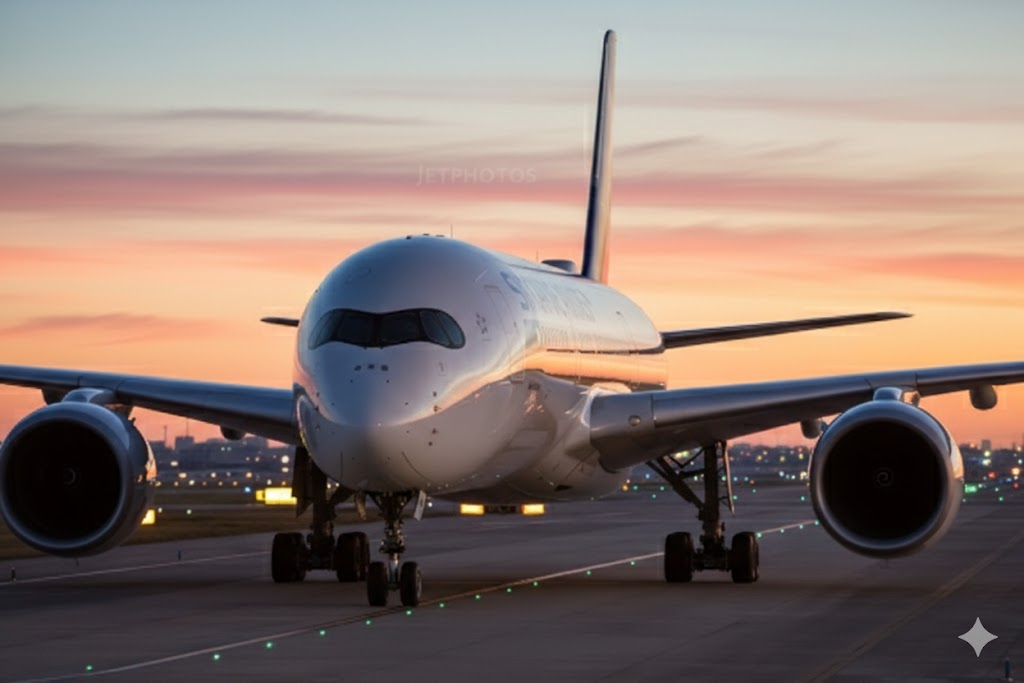
Most travellers book flights based on price, schedule, and airline. The aircraft itself barely gets a glance — it's just a "Boeing 777" or "Airbus A350" buried in the fine print.
That's a mistake. The aircraft type determines your seat width, legroom, cabin layout, in-flight entertainment, power outlets, and whether you're getting a private Business Class suite with a closing door or a 20-year-old angled seat with no aisle access. On some airlines, the difference between aircraft versions on the same route is the difference between a great flight and a miserable one.
Here's how to find out exactly what plane you're flying — before you book, after you book, and right before departure — plus what to do with that information.
Why Your Aircraft Type Matters
The aircraft assigned to your flight affects your experience in ways that go far beyond "big plane" versus "small plane":
| What the Aircraft Determines | Why It Matters |
|---|---|
| Seat width and pitch | A 2-4-2 Economy layout on an A330 means no middle seat for couples. A 3-3-3 on a 787 means someone's always in the middle. |
| Cabin class products | The same airline might have lie-flat suites with doors on one aircraft and angled-flat seats with no privacy on another. |
| In-flight entertainment | Some aircraft have seatback screens with hundreds of options. Others have nothing — or just a holder for your phone. |
| Power outlets | Newer aircraft usually have USB-C and AC power at every seat. Older frames might have nothing, or only in premium cabins. |
| Cabin pressure and humidity | The 787 Dreamliner and A350 have composite fuselages that allow lower cabin altitude and higher humidity — you'll feel noticeably better on arrival. |
| Window size | 787 windows are 65% larger than on a 767. A380 windows are smaller than you'd expect. |
| Noise levels | Engine placement, insulation, and airframe design all vary. The A350 and 787 are measurably quieter than older widebodies. |
| Version lottery risk | Many airlines fly multiple configurations of the same aircraft type, with dramatically different Business Class products. |
Knowing your aircraft is the first step toward choosing a better seat — but it's only the first step. Once you know the aircraft type, you need to know which version of that aircraft you're getting, and which specific seats are best in that configuration. We'll come back to that.
Before You Book: How to Check the Aircraft Type
Google Flights
The easiest method for most travellers. When you search for flights on Google Flights, the aircraft type is displayed in small text below each flight segment, alongside the airline and flight number. Click on a flight to expand the details and you'll see something like "Boeing 787-9 Dreamliner" or "Airbus A321neo."
Google Flights also lets you compare multiple options on the same route, so you can see at a glance whether you'd be on a widebody or narrowbody, a new-generation aircraft or an older one.
Limitation: Google Flights shows the scheduled aircraft type, which can change. It also won't tell you which version of that aircraft type the airline operates — and that's often where the biggest differences lie.
Airline Websites
Nearly every airline displays the aircraft type during the booking process. You'll usually find it in the flight details, just below the departure and arrival times. Some airlines show it prominently; others bury it in expandable details.
Where to find it on major airlines:
| Airline | Where the Aircraft Type Appears |
|---|---|
| American Airlines | Flight details during booking; also on "Your Trip" after booking |
| Delta | Shown in search results under flight times |
| United | Flight details section; also visible in the app |
| British Airways | "Flight details" expandable section during booking |
| Emirates | Shown in search results alongside flight duration |
| Singapore Airlines | Flight information section during booking |
| Qantas | Flight details during booking |
If the airline's website doesn't show the aircraft type clearly, enter the flight number and date on Google Flights instead — it aggregates the data from airline schedules.
Kayak
Kayak added an aircraft filter specifically because so many travellers wanted to include or exclude certain aircraft types. You can filter search results by aircraft model — useful if you want to specifically fly (or avoid) a particular type.
This is especially popular for travellers who want to avoid certain Boeing models for safety reasons, or who specifically want to fly on aircraft known for better passenger comfort like the 787 or A350.
Booking Tools (Expedia, Skyscanner, etc.)
Most major booking engines display the aircraft type somewhere in the flight details, though it's not always prominent. Look for an "info" icon, "flight details" link, or expandable section near the flight number.
After You Book: How to Confirm and Monitor
Once you've booked, the scheduled aircraft type can still change. Airlines swap equipment regularly — for maintenance, demand changes, or operational reasons. Here's how to keep track.
Your Airline's App or Website
Log into "Manage My Booking" or check the app. Most airlines show the current aircraft type for your flight. This is updated when equipment changes are made, though sometimes with a delay.
FlightAware
FlightAware is a free flight tracking tool that shows the aircraft type assigned to your flight. Enter your flight number, and you'll see current and historical data for that route — including which specific aircraft (by tail number) has been operating it recently.
Best for: Seeing patterns — if the same aircraft type has operated your route every day for the past week, it's likely (but not guaranteed) to continue.
Limitation: FlightAware shows the most useful tail number data only a few days before departure. Far out from your flight, it shows the scheduled type, which is the same information Google Flights provides.
Flightradar24
Similar to FlightAware, Flightradar24 shows which specific aircraft — identified by tail number — recently operated your flight number. This is particularly useful if you want to cross-reference the tail number to determine which cabin configuration you're getting.
For example: if you know that Korean Air's 777-300ER with tail number HL8275 has the new Prestige Suites 2.0, and Flightradar24 shows that aircraft has been operating your route, that's a strong (though not guaranteed) indicator.
Flighty (iOS App)
Flighty ($49/year) monitors the specific aircraft assigned to your flight starting 25 hours before departure. It sends push notifications for aircraft changes — often before the airline's own app updates. If you care about equipment swaps, Flighty is the most reliable alert system available.
Best for: Real-time monitoring close to departure. It won't help months in advance, but in the critical 24-48 hours before your flight, it's invaluable.
How to Check: Quick Reference
| What You Need to Know | Best Tool | Cost | How Far in Advance |
|---|---|---|---|
| Aircraft type before booking | Google Flights, airline website | Free | Any time |
| Aircraft type to filter/avoid | Kayak aircraft filter | Free | At booking |
| Which aircraft recently operated your route | FlightAware, Flightradar24 | Free | 1-7 days before |
| Exact seat map and cabin configuration | Airline website seat map | Free | Up to 11 months |
| Real-time aircraft change alerts | Flighty | $49/yr | 25 hours before |
| What the configuration means for your seat | SeatCompare seat guides | Free | Any time |
Now You Know the Aircraft — What Next?
Here's the thing most "how to check your plane" guides miss: knowing the aircraft type is only half the battle.
Airlines frequently operate multiple configurations of the same aircraft. The same "Boeing 777-300ER" at Qatar Airways could be a Qsuite with closing doors or an older 2-2-2 layout. The same "787-8" at American Airlines could be a Collins Super Diamond or a Safran Concept D — completely different seats with completely different best-seat picks.
This is called the version lottery, and it's the single biggest hidden variable in air travel. A "Boeing 777" tells you the airframe. It doesn't tell you what's inside.
So once you've identified your aircraft type, you need to take two more steps:
Step 1: Check the Seat Map for Your Specific Flight
Go to the airline's website or app, enter your flight number and date, and look at the seat map in detail. The layout pattern — 1-2-1 versus 2-2-2 versus 2-3-2 — reveals which specific configuration you're getting.
Step 2: Get Version-Specific Seat Recommendations
Generic seat advice — "pick a window" or "avoid the back" — doesn't account for the fact that the best seat changes entirely between configurations. Row 5A might be the best Business Class seat on one version and a galley-adjacent noise zone on another.
This is where a detailed seat guide becomes essential. SeatCompare's guides cover each configuration separately, so you're getting recommendations for the specific version of the aircraft you're actually flying — not generic advice for the aircraft type.
Step 3: Monitor for Changes
Aircraft assignments aren't final until pushback. Check your seat map periodically — weekly in the month before travel, daily in the final week. If the aircraft changes, you need to reselect the best seat in the new configuration before other passengers do.
Common Aircraft Types and What to Expect
For travellers who are new to checking aircraft types, here's a quick reference for the most common aircraft you'll encounter on major routes:
Widebody (Long-Haul) Aircraft
| Aircraft | Typical Routes | What to Expect |
|---|---|---|
| Boeing 777-300ER | Major international routes | The long-haul workhorse. Huge variation between airlines — from private suites to cramped 3-4-3 Economy. |
| Boeing 787-8/787-9 | Medium/long-haul international | Composite fuselage = better cabin pressure, bigger windows. Many airlines put their newest Business Class here. |
| Boeing 787-10 | Medium-haul international | Stretched 787. Slightly more seats than 787-9 but same comfort features. |
| Airbus A350-900 | Long-haul international | Quiet, comfortable, modern. Lower cabin altitude like the 787. Often carries airline's latest cabin product. |
| Airbus A350-1000 | Long-haul flagships | Stretched A350. Premium routes for airlines like BA, Cathay, Virgin Atlantic, Qatar. |
| Airbus A330-300/A330-900neo | Medium/long-haul | Versatile widebody. The neo version is quieter and more fuel efficient. 2-4-2 Economy is passenger-friendly. |
| Boeing 767-300ER | Transatlantic, especially US carriers | Ageing but serviceable. 2-1-2 or 1-2-1 Business on Delta/United. Being retired by some carriers. |
| Airbus A380 | Major hub routes | Double-decker. Upper deck is generally quieter. Being phased out by some airlines but kept by Emirates, Singapore, Qantas, BA. |
Narrowbody (Domestic/Short-Haul) Aircraft
| Aircraft | Typical Routes | What to Expect |
|---|---|---|
| Boeing 737-800 | Domestic, short-haul | The most common aircraft in the world. 3-3 Economy, typically 30-32" pitch. |
| Boeing 737 MAX 8/9 | Domestic, short/medium-haul | Updated 737 with better fuel economy and slightly wider cabin feel from redesigned overhead bins. |
| Airbus A320/A321 | Domestic, short-haul, some transatlantic (A321XLR) | 3-3 layout. A321 is stretched with more seats. A321XLR can fly transatlantic. |
| Airbus A321neo | Domestic, medium-haul | Latest generation. Common on Delta, JetBlue, American. Some airlines use for long-haul with lie-flat seats. |
| Embraer E175 | Regional US routes | 2-2 layout. Small but no middle seats — surprisingly comfortable for short flights. |
Frequently Asked Questions
Can the airline change my aircraft after I book?
Yes. Airlines can and do change the aircraft assigned to a flight at any time, including the day of departure. The aircraft type shown at booking is the airline's current plan, not a guarantee. Their contract of carriage sells you transportation in a specific cabin class, not on a specific aircraft.
Does the aircraft type affect safety?
All commercial aircraft operating scheduled flights meet the same regulatory safety standards. There is no meaningful safety difference between aircraft types for passengers. The aircraft type primarily affects comfort, not safety.
What's the difference between a 787-8, 787-9, and 787-10?
They're different lengths of the same basic aircraft. The 787-8 is the shortest (242 seats typical), the 787-9 is stretched (290 seats typical), and the 787-10 is the longest (330 seats typical). They share the same cabin comfort features — composite fuselage, larger windows, better humidity — but the longer versions can fit more passengers.
What's a "widebody" vs "narrowbody"?
Widebody aircraft have two aisles (like the 777, 787, A350, A330) and are used for long-haul international flights. Narrowbody aircraft have one aisle (like the 737, A320, A321) and are typically used for domestic and short-haul flights. Widebodies generally offer more comfort, more cabin class options, and better in-flight entertainment.
I see "operated by" a different airline — what does that mean?
This is a codeshare. You booked with one airline, but a different airline is actually operating the flight with their aircraft and crew. The aircraft type and cabin product will be that of the operating airline, not the airline you booked with. Always check who is actually operating the flight.
Once you know your aircraft, SeatCompare's seat guides cover each configuration in detail — including version lottery risks, specific seat recommendations, and seats to avoid. Enter your flight number in Find My Seat for recommendations tailored to your exact flight, or browse our Seat Guides for detailed version-by-version analysis.