Cebu Pacific A320neo Seat Selection Guide (2026)
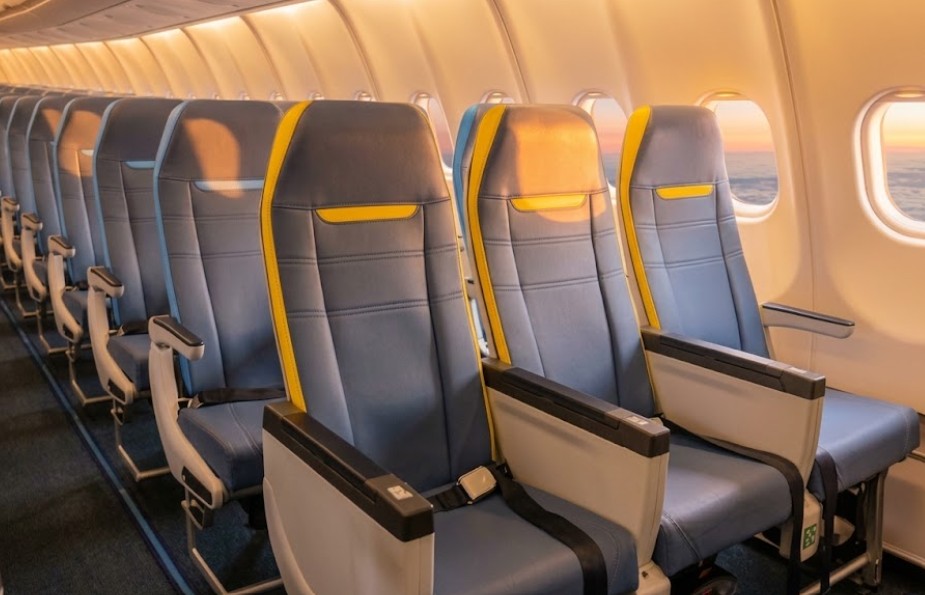
Cebu Pacific flies the A320neo in two configurations, and the seat you want carries a different number on each of them. Get it wrong and you pay an extra-legroom fee for a seat that will not recline.
✈️ Quick Verdict
Aircraft: Airbus A320neo, all-economy
Two layouts: 188 seats (rows 1–33) and 194 seats (rows 1–34)
Version lottery: Yes — and it moves the best row by one number
Best seats: Row 14 on the 188-seater. Row 15 on the 194-seater. Both are exit rows with extra legroom and full recline.
Seats to avoid: 33B and 33C on the 188. The whole of row 34 on the 194. Row 11 (188) and row 12 (194) — restricted recline, no legroom, standard price.
Seatback IFE: Not fitted on either variant.
Tell them apart: Look at row 1. Six seats means the 188. Four seats and no window pair means the 194.
The exit row you want is numbered differently on the two jets
Cebu Pacific flies the A320neo in two configurations, and they are close enough that the booking screen will not warn you. Both are all-economy, both skip row 13, both put the overwing exits in roughly the same place. But one has 188 seats and the other has 194, and that six-seat difference shifts the rear of the cabin back by one row number.
The consequence is specific. On the 188-seat aircraft the two overwing exit rows are 12 and 14. Row 12 gets extra legroom, but its window and middle seats have restricted recline because row 14 behind it is also an exit and the path has to stay clear. Row 14 gets the same legroom and reclines normally. Row 14 is the seat to buy.
On the 194-seat aircraft the exits sit one row further back. The pair is 14 and 15. Now row 14 is the compromised one — legroom, restricted recline — and row 15 is the row that gives you both. A passenger who simply remembers “row 14 on the Cebu neo” books the wrong seat half the time.
Check row 1 before you pay. On the 188-seat jet row 1 is a normal six-across row with window seats. On the 194-seat jet row 1 has only four seats — 1B, 1C, 1D and 1E — because the forward galley has been turned to face the aisle to release floor space. If the seat map shows no 1A and no 1F, you are on the 194 and the good exit row is 15.
The version lottery
Published fleet figures for these two layouts do not agree with each other. The per-layout counts on record — three aircraft at 188 seats, four at 194 — do not reconcile with the totals published for the A320neo sub-fleet as a whole, so any odds you see quoted anywhere, ours included, would be invented. Use the row-1 tell instead: it is visible on the seat map at the moment you are choosing, which is the only moment that matters.
The 194-seat layout is the denser aircraft by some margin. It pushes the limits of density for the type, and it shows: the forward galley faces inward, row 1 loses its window seats, and a four-seat stub row 34 appears against the rear bulkhead. Six seats are rated red on the 194 against three on the 188.
| A320neo — 188 seats | A320neo — 194 seats | |
|---|---|---|
| Rows | 1–33 (no row 13) | 1–34 (no row 13) |
| Row 1 | Six seats, A–F | Four seats, 1B–1E only |
| Exit rows | 12 and 14 | 14 and 15 |
| Best row | 14 — legroom, full recline, all six seats | 15 — legroom, full recline, all six seats |
| Pure-loss row | 11 — restricted recline, no legroom | 12 — restricted recline, no legroom |
| Back-wall seats | 33B and 33C only | 34B, 34C, 34D, 34E |
| Windowless seat | 32F | None |
The 188-seat A320neo, row by row
Best seats
Row 14 (14A–14F) is the pick. It is the rear overwing exit row, it carries the extra legroom, and unlike row 12 it reclines normally — there is no exit row behind it demanding a clear path. All six seats rate well. If Cebu is charging the same for row 12 and row 14, row 14 is strictly the better buy.
12C and 12D are the exception in row 12. The aisle pair escapes the recline restriction that applies to 12A, 12B, 12E and 12F, so they get exit-row legroom with a working seat back. If row 14 is gone, take these before anything else in row 12.
Row 1 (1A–1F) is the bulkhead. Extra legroom, no exit-row duties, and you are off the aircraft first. The trade-offs are real: no underseat storage because there is a wall in front, and the tray table lives in the armrest, so the seat is effectively a little narrower. 1A and 1B also sit near the forward lavatory. 1C and 1D face a partial bulkhead only, which leaves a little extra room on one side.
Free window seats worth taking: 5A, 5F, 8F, 19A, 21F, 22A, 24F and 27F all have properly aligned windows. That is not a small thing on an aircraft with no seatback screens and a sector that can run past four hours.
Seats to avoid
33B and 33C. Row 33 is not really a row — it is two seats squeezed against the rear bulkhead where the galley narrows the cabin. They do not recline, they sit immediately beside a lavatory door, 33B is narrower than a standard seat, and 33C takes the galley noise as well. These are the two worst seats on the aircraft.
Row 11. The row that costs you something for nothing. It sits directly in front of exit row 12, so 11A, 11B, 11E and 11F have restricted recline — but row 11 gets no extra legroom and no discount, and nothing on the booking map distinguishes it from row 10. 11C and 11D are unaffected.
Row 32, and 32F in particular. The whole row sits in rear lavatory traffic and takes galley noise from 32C back. 32F is the worst of them: there is no usable window at that seat position at all. You would be booking a window seat and getting a wall.
Misaligned windows: 7A, 7F, 15A, 18A, 21A, 23F and 26F have a window that sits behind or ahead of the seat rather than beside it. You will be leaning to see out. Not a disaster, but if you are choosing between 21A and 21F, take 21F.
The 194-seat A320neo, row by row
Best seats
Row 15 (15A–15F) is the equivalent of row 14 on the other jet: rear overwing exit, extra legroom, full recline on all six seats. This is the row to pay for.
14C and 14D. Row 14 is the forward exit row here, so it has the legroom but 14A, 14B, 14E and 14F cannot fully recline. The aisle pair can. Second choice behind row 15.
2B, 2C, 2D and 2E are the quiet surprise on this aircraft. Because row 1 has been cut back to four seats, the middle block of row 2 gets roughly 31 inches of pitch — four inches more than the norm in this cabin — without any of the bulkhead penalties. They rate well, and they are not exit-row seats, so no age or fitness conditions attach. On the densest narrowbody Cebu Pacific flies, this is the best value in the cabin.
2A and 2F get the extra legroom too, because there is no seat directly in front of them, but they pay for it with no underseat storage and the tray table in the armrest. Worth it if you want the space and are travelling light.
Free window seats worth taking: 27A, 27F, 30A and 30F have clean window alignment.
Seats to avoid
Row 34 — all four seats. 34B, 34C, 34D and 34E sit against the rear wall. None of them recline, all of them are immediately adjacent to a lavatory door, and 34C, 34D and 34E take galley noise as well. All four are rated red. This is where the extra six seats on this variant came from, and it shows.
Row 1 — 1B and 1C especially. This is the counter-intuitive one. Row 1 on the 194-seater has only four seats and every one has direct aisle access with nobody to climb over, which sounds excellent. But the forward galley was rotated to face the aisle to make room for them, so row 1 now sits immediately against a galley and a lavatory. 1B and 1C are rated red. There is no underseat storage and no seatback ahead for the tray table. If you want the front of this aircraft, take row 2 instead.
Row 12. The pure-loss row on this variant: in front of exit row 14, restricted recline for 12A, 12B, 12E and 12F, no legroom, standard price.
Row 33. The whole row sits in rear lavatory traffic; 33C is a narrower seat, and 33C through 33F take galley noise.
Misaligned windows: 16A, 16F, 19A, 19F, 29A, 29F, 32A and 32F.
Cabin features on both variants
| Feature | What you get |
|---|---|
| Layout | 3-3 all-economy, single cabin |
| Extra legroom | Bulkhead row 1 and the two overwing exit rows, sold as paid seat selection |
| Exit row conditions | Minimum age 15, able to follow crew instructions in English, physically able to operate the exit |
| Seatback IFE | Not fitted |
| Direct aisle access | About a third of seats on both; the 194 adds eight seats with no neighbour to climb over, in rows 1 and 34 |
| Seats rated red | 3 on the 188-seater, 6 on the 194-seater |
Quick picks by traveller
| You are | 188-seat jet | 194-seat jet |
|---|---|---|
| Tall, want legroom | 14C or 14D | 15C or 15D |
| Want a real window | 5A, 5F, 19A or 22A | 27A, 27F, 30A or 30F |
| Paying nothing extra | Rows 5–10, forward and quiet | 2B–2E if unsold, otherwise rows 3–10 |
| Solo, want aisle access | Any C or D seat forward of row 30 | 1D or 1E — aisle access and no middle neighbour, if you accept the galley |
| Off the aircraft first | Row 1 | Row 2 |
| Avoid at all costs | 33B, 33C, 32F, row 11 | Row 34, 1B, 1C, row 12 |
How to tell which A320neo you are on
Do it from the seat map at checkout, not from the aircraft type — both are listed as A320neo and the registration will not help you.
- Look at row 1. Six seats across means the 188-seat layout. Four seats, with no 1A and no 1F, means the 194.
- Scroll to the back. A row 34 means the 194. Ending at row 33 with just two seats means the 188.
- Then pick your exit row. Row 14 on the 188, row 15 on the 194.
If the seat map has not loaded yet — which happens on schedule changes and some agency bookings — assume nothing and re-check once it appears. Route is a weak hint rather than a rule: recent flying puts the 188-seat jet mostly on Clark international sectors to Tokyo, Bangkok, Hong Kong and Singapore, and the 194-seat jet mostly on Manila domestic trunk routes. Neither pattern is exclusive, and both are the kind of thing an aircraft swap undoes on the morning of departure.
Frequently asked questions
Which Cebu Pacific A320neo seat has the most legroom?
Row 14 on the 188-seat aircraft and row 15 on the 194-seat aircraft. Both are the rear overwing exit row, which means extra legroom without the restricted recline that affects the forward exit row.
Is row 12 or row 14 better on the Cebu Pacific A320neo?
On the 188-seat jet, row 14. Both have extra legroom, but 12A, 12B, 12E and 12F cannot fully recline because row 14 behind them is an exit. On the 194-seat jet the same relationship holds between rows 14 and 15 — take 15.
Why does the Cebu Pacific A320neo have no row 13?
Cebu Pacific skips row 13 on both A320neo layouts. It is a numbering convention, not a missing section of cabin — row 12 is followed physically by row 14.
Does the Cebu Pacific A320neo have seatback screens?
No. There is no seatback entertainment on either A320neo layout. Download before you fly, and bring a way to prop up your own device — in row 1 and the exit rows the tray table is in the armrest, so there is no seatback to lean it against.
Are the last-row seats worth taking if they are cheap?
No. 33B and 33C on the 188-seater and all of row 34 on the 194-seater sit against the rear wall with no recline and a lavatory door beside them. On a one-hour domestic hop it is survivable; on a five-hour sector to Japan or the Gulf it is not worth any saving.
Which Cebu Pacific A320neo variant is better?
The 188-seat aircraft, by a small margin. It has fewer compromised seats, a full six-seat bulkhead row, and no four-abreast stub row at the back. But the 194-seater has the best unpaid seats in the fleet in 2B–2E, so it is not a clean win either way.
Related Guides
- Cebu Pacific A330neo Seat Map & Best Seats (2026)
- AirAsia A320 Seat Map & Best Seats (2026)
- Scoot A321neo Seat Selection Guide (2026)
- Jetstar A320 & A320neo Seat Map & Best Seats (2026)
- IndiGo A320neo Seat Selection Guide (2026)
- Cebu Pacific A321neo Seat Map & Best Seats (2026)
- Cebu Pacific A320 Seat Map & Best Seats (2026)
- Cebu Pacific ATR 72-600 Seat Map & Best Seats (2026)