Spirit Airlines Is Gone — Here's What Flies Your Route Now, Seat-by-Seat
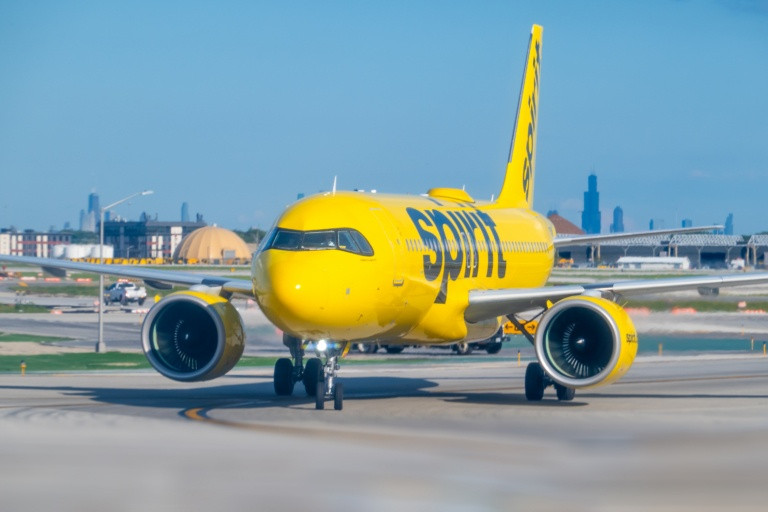
At 3:00 AM Eastern on Saturday 2 May 2026, the last Spirit Airlines flight — NK1833 from Detroit to Dallas/Fort Worth — touched down. By the time most of its passengers had reached baggage claim, the airline that taught America to fly for $39 had ceased to exist.
The shutdown is the first collapse of a major US airline since Midway Airlines folded in the immediate wake of 9/11. It removes roughly 2% of all US domestic seats from the market overnight, costs around 17,000 people their jobs, and strands thousands of passengers who'd booked summer travel on the assumption that low fares would still be there in July.
If you're one of those passengers, or you're staring at a future booking that no longer exists, you have two questions: who flies my route now, and what's the seat actually like? This guide answers both — market by market, aircraft by aircraft, with the seat-product detail you won't get from a generic news write-up.
What you're losing: a quick Spirit recap
To know what's been replaced, it helps to remember what was actually there. Spirit's seat product was not, despite the jokes, undifferentiated. It had two products, both unusual:
- Standard seat — 28" pitch, 17.75" width, no recline (the cushion is pre-set at a fixed angle). This was the tightest seat pitch in the industry on a sustained, fleetwide basis.
- Big Front Seat (BFS) — 36" pitch, 20" width, 2-2 layout in the front rows, no recline, no extra service. Despite the lack of frills, BFS was genuinely competitive on legroom with domestic First on legacy carriers.
Neither product included recline, IFE screens, in-seat power on most aircraft, or free Wi-Fi. The fleet was all-Airbus narrowbody — A319, A320ceo/neo, A321ceo/neo — with seat counts ranging from 145 (A319) to 240 (A321neo).
The Big Front Seat is the product travellers will miss most, because nothing else in the US ULCC market is precisely equivalent. We'll come back to it.
The carriers absorbing Spirit's network
Five carriers will pick up the bulk of Spirit's former passengers. Each offers a meaningfully different seat experience.
Frontier Airlines (F9) — the closest like-for-like in business model. All-Airbus narrowbody fleet (A320neo, A321ceo, A321neo), slim non-reclining seats at ~28" pitch in standard economy, and a tiered "Stretch" and "UpFront Plus" extra-legroom product that overlaps closely with Spirit's BFS. Frontier already operates more than 100 routes that Spirit also flew, which is why its share price moved sharpest on the shutdown news.
JetBlue (B6) — the most aggressive on capacity expansion. Within hours of Spirit's wind-down JetBlue announced 11 new routes from Fort Lauderdale, beginning 9 July, in markets Spirit had served. JetBlue's seat product is materially better than Spirit's — 32" pitch standard, recline, free Wi-Fi (Fly-Fi), seatback IFE, free snacks — but fares will track higher.
Southwest (WN) — newly transitioned to assigned seating, with an Extra Legroom product on top of standard. 737-only fleet (-700, -800, MAX 8, MAX 7), ~32-33" pitch in standard, two free checked bags, no IFE screens (BYOD streaming). Strong on point-to-point leisure routes that overlap heavily with Spirit's network.
Breeze Airways (MX) — the David Neeleman start-up, all-A220-300 fleet, with a three-tier "Nice / Nicer / Nicest" product. The "Nicest" first-class recliner on the A220 is the closest analogue to a domestic premium seat in the leisure market. Heavy presence in underserved leisure routes that Spirit also flew.
Allegiant (G4) — the smallest of the ULCCs, A319/A320 fleet, ~30" pitch standard, fixed-recline. Limited network overlap with Spirit but does serve some of the same secondary leisure markets (Punta Gorda, St. Pete-Clearwater, Bellingham).
The legacies — American, Delta, United — also serve almost every Spirit city via their hubs, but rarely offer non-stops on Spirit's leisure-leisure pairings. That's the gap the ULCC and JetBlue land-grab is filling.
Spirit's biggest markets, seat-by-seat
Spirit's most-affected markets, by seat capacity removed: Las Vegas (LAS), Fort Lauderdale (FLL), Orlando (MCO), followed by Newark (EWR), Detroit (DTW), Chicago (ORD), with Atlantic City (ACY) the most existentially affected because Spirit was the only major scheduled operator there.
Here's what flies them now.
Fort Lauderdale (FLL) — Spirit's largest base
FLL was Spirit's home, the airport its yellow tails dominated. JetBlue is the clear winner here: it's adding 11 new routes from FLL beginning 9 July, all formerly served by Spirit, six to destinations JetBlue has never flown before. JetBlue plans to scale FLL to roughly the size of its Boston base — its third major operation after JFK and BOS, with around 130 daily departures projected for summer 2026 (up roughly 75% on summer 2025).
The new JetBlue FLL routes from JetBlue's announcement:
- Baltimore/Washington (BWI), 3× daily from 9 July
- Charlotte (CLT), 3× daily from 9 July
- Chicago O'Hare (ORD), 2× daily from 9 July
- Columbus, OH (CMH), daily from November
- Barranquilla, Colombia (BAQ), daily from 1 October
- Cali, Colombia (CLO), daily from 15 October
- Plus additional domestic routes across the eastern US
Aircraft and seat product on these routes: JetBlue's domestic FLL operation runs on A320 (Restyled), A321ceo, and the newer A321neo (non-Mint variants), with A220-300 on selected routes. Standard pitch is 32"; Even More Space rows offer 35-38" pitch with priority boarding and free booze. The A220 has the platform's signature 2-3 layout — no middle seat in the window pair, which is one of the genuinely better economy experiences in the US market.
Frontier continues to operate from FLL and has positioned itself as the price-led alternative. Standard economy on the A320neo/A321 family at ~28-29" pitch, no recline. UpFront Plus rows (typically rows 1-2) at 38" pitch in a blocked-middle 2-2 configuration are the closest direct heir to Spirit's Big Front Seat.
→ See FleetBrain guides: JetBlue A220-300, JetBlue A320 Restyled, JetBlue A321ceo, Frontier A321neo
Orlando (MCO) — leisure capital, ULCC battleground
MCO was Spirit's second-largest market and the one most exposed to summer leisure demand. Frontier and JetBlue split the recovery here, with Southwest reasserting on north-south domestic.
For Caribbean and Latin American routes Spirit served from MCO (San Juan, Santo Domingo, Cartagena, Lima), JetBlue is the most likely picker-up given its existing Caribbean depth. Spirit's A321neo routes to South America transition primarily to JetBlue's A321LR (where Mint isn't deployed) and Avianca / Copa connections via hubs.
For domestic MCO–everywhere routes, Frontier has the closest seat-product experience to what Spirit offered. Travellers prioritising legroom over price should look at JetBlue Even More Space or Southwest's new Extra Legroom seats (the latter now bookable with assigned seating, a major change from the open-seating era).
Las Vegas (LAS) — biggest capacity hit
LAS was, by Cirium's count, the single largest market in terms of seats removed. Spirit's transcon and short-haul Western network out of LAS leaves a real hole.
Frontier is best positioned here on the leisure-leisure routes (LAS-DTW, LAS-ORD, LAS-CLE, LAS-MSP) given network overlap. Southwest dominates the LAS-California intra-West market and remains the default for short-hop replacements (LAS-BUR, LAS-SAN, LAS-OAK). On transcon (LAS-east coast), JetBlue offers a meaningfully better seat — 32" pitch, IFE, Wi-Fi — and may capture price-sensitive travellers willing to pay $30-50 more per leg for the difference.
Breeze is the wild card: its A220-300 fleet is well-suited to LAS-secondary-city routes, and the airline has been steadily adding LAS service. Breeze's "Nicest" first-class product (recliner-style, 39" pitch, 2-2) is the only true premium seat among the budget carriers stepping into Spirit's gap.
Atlantic City (ACY) — existential risk
🚫 No like-for-like replacement
This is the airport with the most acute Spirit dependency. With Spirit gone, ACY is at meaningful risk of losing scheduled mainline service entirely until another carrier formally fills the slot. Atlantic City passengers should expect to drive to PHL or EWR for the foreseeable future. We'll update this section when a new operator formalises ACY service.
Newark (EWR), Detroit (DTW), Chicago (ORD) — hub markets with legacy options
Unlike the leisure markets, Spirit's hub-airport routes have natural fallbacks because the legacies fly them via their own hubs.
- EWR: United is the obvious primary; for ULCC continuity, Frontier still operates EWR and JetBlue's planned FLL-EWR is one of the new 11 routes. The Blue Sky partnership between United and JetBlue is positioned to capture much of Spirit's price-sensitive volume here.
- DTW: Delta is the dominant operator. Frontier maintains DTW service on key leisure routes. JetBlue has limited DTW presence.
- ORD: United and American fight for ORD; Frontier serves ORD with significant capacity, and JetBlue's FLL-ORD addition (twice daily from 9 July) is a notable expansion. Spirit's bare-bones ORD-Florida runs are now best replicated via Frontier.
The hub-market story is less dramatic than the leisure-market story, because connectivity was never the issue — the seat experience was. Travellers used to Spirit's $39 base fare on ORD-MCO will pay more on any replacement, but they'll pay it for a seat that reclines.
The Big Front Seat question
If there's one Spirit product worth a section of its own, it's the Big Front Seat. The BFS was a genuinely odd product — domestic First-class legroom (36" pitch) with none of the service (no priority boarding included by default, no drinks, no meals, no lounge access). What it offered was the seat, and only the seat, at typically $40-90 above the base fare. For a tall traveller on a 3-hour flight, it was unbeatable value.
Here are the closest equivalents on the carriers replacing Spirit:
| Product | Carrier | Aircraft | Pitch | Layout | Recline | Service |
|---|---|---|---|---|---|---|
| Big Front Seat (RIP) | Spirit | A319/A320/A321 | 36" | 2-2 | None | Seat only |
| UpFront Plus | Frontier | A320neo/A321neo | 38" | 2-2 (blocked middle) | Standard | Priority boarding, snack/drink |
| Even More Space | JetBlue | A220/A320/A321 | 35-38" | 3-3 / 2-3 | Standard | Priority boarding, free booze |
| Mint (where available) | JetBlue | A321LR/A321neo Mint | Lie-flat | 1-1 / 2-2 | Lie-flat | Full premium |
| Nicest (first class) | Breeze | A220-300 | 39" | 2-2 | Recliner | Premium service |
| Extra Legroom | Southwest | 737 family | 34" | 3-3 | Standard | Priority boarding |
| First Class | AA/DL/UA | Various | 36-40" | 2-2 | Recliner | Full domestic First |
For pure legroom-per-dollar, Frontier UpFront Plus is the truest BFS heir — same airline category, same blocked-middle premise, slightly more pitch, and pricing tends to land in a similar zone above base fare. The honest answer for a former BFS loyalist is: book Frontier UpFront Plus where the route works, JetBlue Even More Space where it doesn't.
For travellers who liked the BFS specifically for its quirk — a paid-for-seat-only product without the rest of the First-class theatre — there isn't really a successor. UpFront Plus comes with priority boarding and a drink. If you genuinely just wanted the inches, Spirit was offering something the rest of the market doesn't.
What stranded Spirit passengers should do now
A practical checklist for anyone with a Spirit booking they can't fly:
- Don't go to the airport. Spirit's customer service is shut. There's no ticket counter to talk to.
- File for refund through your card issuer (chargeback) if you booked on credit. This is the fastest route to your money back. Spirit has stated refunds will be issued, but the timing is uncertain.
- Use rescue fares while they last. United, Delta, JetBlue and Southwest have agreed to cap one-way fares for stranded Spirit passengers at around $200 (with Spirit confirmation number and proof of payment). This window is finite — book before the carriers formally close the offer.
- If you booked through a travel agent or OTA, contact them, not the airline. The agent has obligations on rebooking that supersede Spirit's wind-down.
- Travel insurance may cover incidentals (hotels, replacement bookings) — check your policy's "supplier insolvency" clause specifically.
- Free Spirit miles are unlikely to be worth anything in cash terms. Watch for any acquirer to formally honour them — at time of writing, none has.
Where the seat market goes from here
Spirit's exit doesn't just remove a carrier; it removes a kind of seat. The 28" pitch, no-recline, no-frills standard product was an extreme expression of unbundling, and its disappearance is going to recalibrate the floor of the US economy seat. Frontier will hold that floor for now, but with less competitive pressure, the incentives all point upward — slightly higher fares, slightly more pitch, slightly better included service.
The longer-term question is whether the market still wants what Spirit was selling. Coverage of the shutdown has emphasised that travellers had been trading up to JetBlue and the legacy basic-economy products for years. If that's right, Frontier and Allegiant face the same demand erosion that took Spirit down, just on a delayed timeline. If it's wrong, expect Frontier to grow into the share Spirit vacated and re-establish a hard floor on US fares within 18 months.
For SeatCompare.ai's audience, the practical answer is: the era when "the cheapest seat" and "the most uncomfortable seat" meant the same thing is ending. The cheapest seat on most US domestic routes from summer 2026 will be a Frontier slimline or a JetBlue Even More Space upgrade — both meaningfully better than what Spirit offered, both meaningfully more expensive.
The Big Front Seat is dead. Long live whatever replaces it.
Frequently Asked Questions
Will Spirit Airlines come back?
Almost certainly not in any recognisable form. The wind-down is described as "orderly" rather than reorganisation, and the failure to secure a $500 million federal lifeline closes the most realistic restructuring path. An online revival effort has gathered unverified pledges but no industry observer is treating it as serious.
Are my Free Spirit miles worth anything?
At the time of writing, no. Loyalty programs in airline insolvency are typically settled at pennies on the dollar in bankruptcy proceedings, if at all. Watch for any acquirer or partner to formally honour balances — none has as of writing.
Which airline has the closest seat to Spirit's Big Front Seat?
Frontier UpFront Plus — same category of carrier, same blocked-middle 2-2 configuration, slightly more pitch (38" vs 36"). Pricing also tracks at a similar level above base fare. JetBlue Even More Space offers similar legroom but in a standard 3-3 (or 2-3 on the A220) layout, not a 2-2.
What's the cheapest way to fly Spirit's old routes now?
For routes where Frontier overlaps (over 100 of them), Frontier base fares will be the closest analogue to Spirit's. Southwest's two-free-bag policy can make Southwest cheaper end-to-end for travellers with checked baggage, even if the headline fare is higher.
Has any new carrier announced service to Atlantic City (ACY)?
Not as of writing. ACY is the airport most existentially affected by Spirit's exit because Spirit was the dominant scheduled operator there. Travellers should plan around PHL or EWR until a new carrier formalises ACY service.
What about international destinations Spirit served?
Spirit's Latin America and Caribbean network (San Juan, Santo Domingo, Cartagena, Lima, Cancún, San José, Guatemala City) will primarily be picked up by JetBlue, Avianca, Copa, and the legacies via their hubs. Direct ULCC service from secondary US cities to Latin America is the part of Spirit's network least likely to be fully replaced.