Etihad A320 Seat Selection Guide (2026)
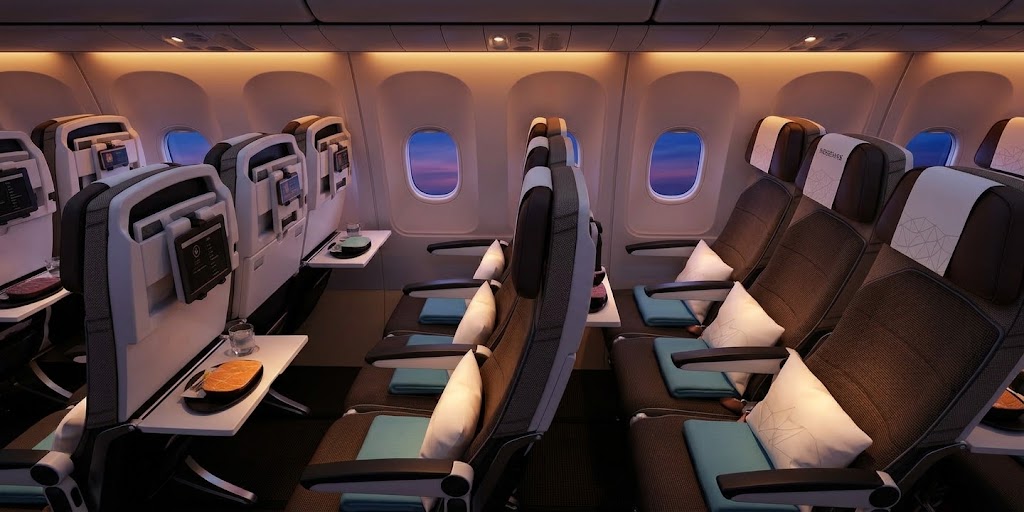
✈️ Quick Verdict
Aircraft: Airbus A320ceo — two configurations, and they are barely the same aircraft
Config: 136 seats (16 Business + 120 Economy, 3 aircraft) · 158 seats (8 Business + 150 Economy, 17 aircraft)
Version lottery: Yes, and it is worth three inches of legroom in every economy row. About 32in on the 136-seat jet against about 29in on the 158-seat one
The one-look test: the business cabin depth. Four rows (1–4) = 136 seats · two rows (1–2) = 158 seats. Or the last row: 25 vs 30
The seat to know about: 6A, 6B and 6C on the 158-seat jet — a bulkhead row with less legroom than an ordinary seat
Best seats: 136 seats: row 6, and the cabin is roomy throughout · 158 seats: rows 13 and 14 at about 33in
Seats to avoid: 6A, 6B, 6C (158 seats) · the last two rows either way
IFE: Panasonic eXW streaming to your own device; Business also gets pull-out screens
One aircraft type, two very different economy cabins
Etihad flies twenty A320ceos and the seat count splits them almost cleanly: seventeen carry 158 seats and three carry 136. That is a 22-seat gap on a single-aisle aircraft, and it does not come out of one dense block at the back. It comes out of every row.
Economy rows on the 136-seat aircraft are drawn at about 32 inches. On the 158-seat aircraft the standard is about 29 inches. Three inches, in every row, on the same aircraft type flying the same routes. On top of that, the business cabin halves — sixteen seats over four rows becomes eight over two.
| 136 seats | 158 seats | |
|---|---|---|
| Business | 16, rows 1–4, 2-2 | 8, rows 1–2, 2-2 |
| Economy | 120, rows 6–25, 3-3 | 150, rows 6–30, 3-3 |
| Standard economy pitch | about 32in | about 29in |
| Exit rows | 9 and 10, at cabin standard | 13 and 14, about 33in |
| Bulkhead row 6 | Extra legroom on all six | Extra on D/E/F, less than normal on A/B/C |
| Aircraft | 3 | 17 |
| Last row | 25 | 30 |
The trap: row 6 on the 158-seat aircraft
Row 6 is the economy bulkhead, so a booking map shows it as a legroom row and prices it that way. It is split down the middle. 6D, 6E and 6F get the extra room. 6A, 6B and 6C have a wall about 20in away — closer than the seat back you would normally have in front of you, which makes them tighter than an ordinary economy seat, not roomier. All six also lose underseat storage and take the tray out of the armrest.
If you are on the 136-seat aircraft
There is very little to get wrong. The whole economy cabin is drawn at about 32in, so there is no scarce legroom band to hunt for and the exit rows are not a prize — rows 9 and 10 are the overwing exits and sit at roughly the same spacing as their neighbours.
Row 6 is a clean bulkhead here: extra legroom on all six seats, with the usual costs of no underseat storage and the tray in the armrest. 6A and 6E are bassinet positions. That is the same row number that is a trap on the dense aircraft, which is a good reason to check which jet you are on before selecting it.
The back is the only place to be careful: rows 24 and 25 back onto the rear lavatories, row 25 does not recline, and the rear galley sits behind 25C and 25D.
Business is sixteen seats over four rows in a 2-2 layout, lettered A and C on the left, D and F on the right. Row 1 leads the cabin with the extra bulkhead room; 1A and 1F are bassinet positions and 1D sits beside the forward galley, so 1C is the pick of the front row. Row 4 catches infant noise from the bassinets ahead of it.
If you are on the 158-seat aircraft
Rows 13 and 14 are the only real legroom in the cabin
The two overwing exit rows are drawn at about 33in against the 29in cabin standard — four inches more, and the only twelve seats on the aircraft with meaningful space. If Etihad is charging for them and you are tall, this is the one time on this aircraft the fee is straightforwardly worth it.
Row 6 is the row to think twice about
Covered above, and it is the single most useful thing to know about this cabin: take 6D, 6E or 6F if you want the bulkhead, and treat 6A, 6B and 6C as worse than an ordinary seat rather than better. 6A and 6E are bassinet positions, and rows 6 and 7 both catch infant noise.
The rest
Rows 29 and 30 back onto the rear lavatories and row 30 does not recline. Windows sit out of line at 15A/F, 20A/F, 25A/F and 30A/F, so those eight window seats have the glass set behind the seat. Business is eight seats in rows 1 and 2 only, with the same 2-2 layout — and here both 1D and 1F sit beside the forward galley, which leaves 1A and 1C as the better pair.
Quick picks by traveller
| You are | 136 seats | 158 seats |
|---|---|---|
| After legroom | Anywhere — the cabin is 32in throughout | Rows 13 and 14 |
| Wanting the bulkhead | Row 6, any seat | 6D, 6E, 6F only |
| A window with a real view | Rows 7–23 | Rows 8–12, 16–19 |
| A couple | A/B or E/F, rows 7–23 | A/B or E/F, rows 13–14 |
| In business | 1C, or rows 2–3 | 1A, 1C |
| Travelling with an infant | Row 6 (6A, 6E) | Row 6 (6A, 6E) |
| Avoiding the worst | Rows 24–25 | 6A, 6B, 6C, rows 29–30 |
How to tell which A320 you are booked on
- Count the business rows. Four rows numbered 1 to 4 is the 136-seat aircraft; two rows is the 158-seat one. This is visible on the seat map before you pick anything.
- Last row number. 25 means 136 seats; 30 means 158.
- Where the exit rows sit. Rows 9 and 10 on the roomy aircraft, rows 13 and 14 on the dense one.
- The odds. Seventeen aircraft carry the 158-seat cabin against three in the 136-seat one, so assume the dense layout unless the seat map tells you otherwise.
Comparable guides
- Etihad A321neo seat guide
- Etihad A321LR seat guide
- Etihad 787-9 seat guide
- Etihad A350-1000 seat guide
- Etihad A380 seat guide
Frequently asked questions
Which Etihad A320 has more legroom?
The 136-seat one, by about three inches in every economy row — roughly 32in against roughly 29in on the 158-seat aircraft. Only three aircraft carry it, against seventeen in the dense cabin, so it is the exception rather than the one to plan around.
Is row 6 a good seat on the Etihad A320?
It depends which aircraft. On the 136-seat jet all six seats get extra bulkhead legroom. On the 158-seat jet the row is split: 6D, 6E and 6F get the extra room, while 6A, 6B and 6C have a wall about 20in ahead of them, which is less space than an ordinary economy seat. Both cabins lose underseat storage in row 6 and put the tray in the armrest.
Which are the exit rows?
Rows 13 and 14 on the 158-seat aircraft, at about 33in — four inches more than that cabin's standard, and the best economy seats on it. Rows 9 and 10 on the 136-seat aircraft, where they are drawn at roughly the same spacing as everything else because the whole cabin is already generous.
Does the Etihad A320 have seatback screens?
Not in economy. Both cabins use the Panasonic eXW system, which streams to your own phone or tablet over the aircraft WiFi. Business seats also have content wired to pull-out displays.
How big is the business cabin?
Sixteen seats over four rows on the 136-seat aircraft and eight seats over two rows on the 158-seat one. Both are a 2-2 recliner lettered A and C on the left, D and F on the right. Counting the business rows on the seat map is the quickest way to identify which aircraft you are on.
Which seats should I avoid?
On the 158-seat aircraft: 6A, 6B and 6C for the short bulkhead, and rows 29 and 30 at the back, where row 30 does not recline. On the 136-seat aircraft: rows 24 and 25, with the same no-recline problem in row 25.