easyJet's New Non-Reclining Seats: More Legroom, No Recline — What It Means for Seat Selection
Quick Verdict
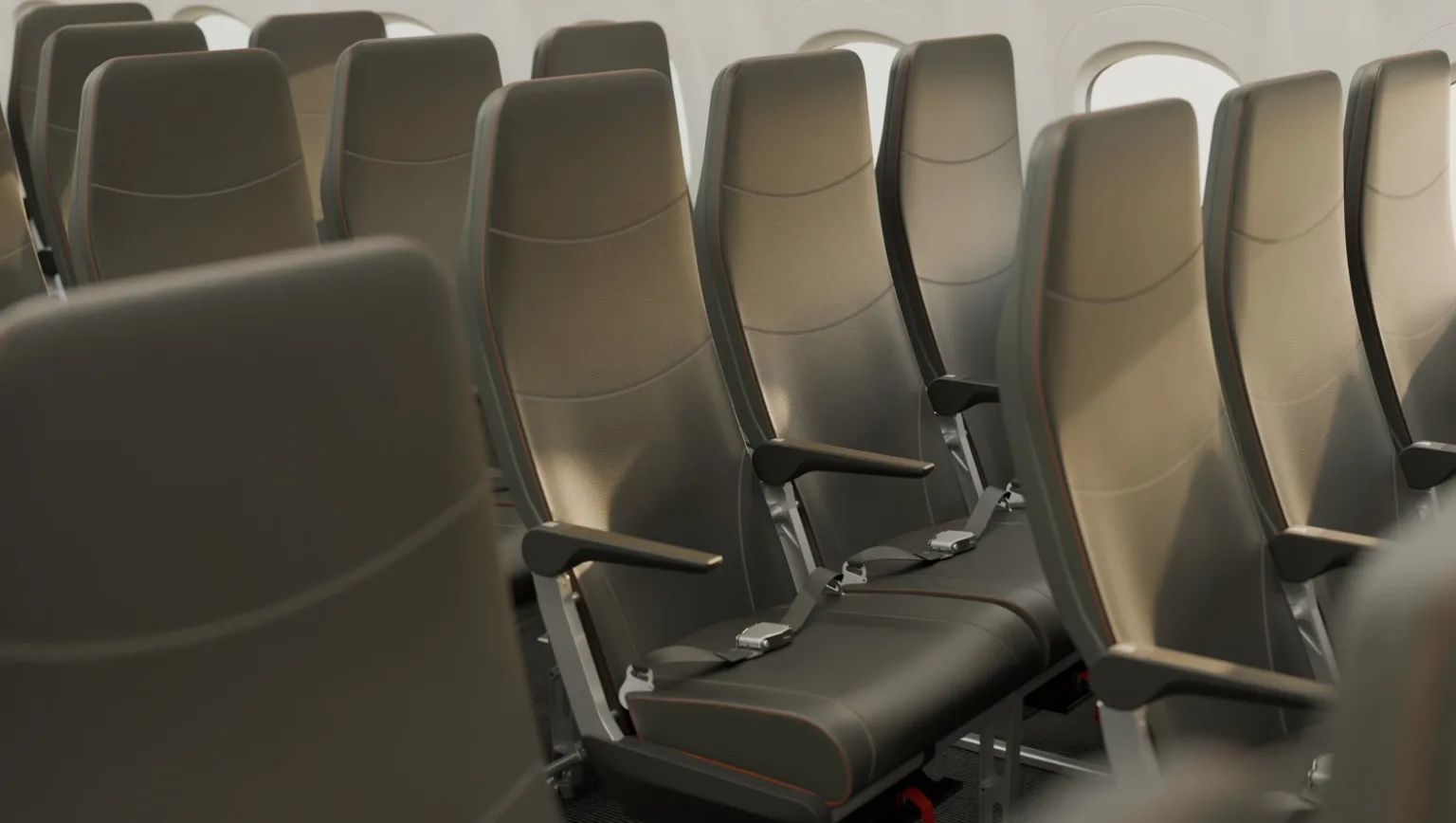
easyJet has ordered a new generation of ultra-lightweight economy seats for 237 incoming Airbus A320neo and A321neo aircraft, arriving from 2028. The Mirus Kestrel seat is 20% lighter than easyJet's current Recaro seats, offers up to two extra inches of legroom without changing the seat pitch, and is built from carbon fibre rather than plastic.
The catch? These seats do not recline. At all. They're fixed at a permanent 22-degree pre-recline angle. There's no button, no mechanism, no movement. For short-haul flights of 2–4 hours, most passengers won't care. For longer easyJet routes approaching 5 hours, the trade-off gets more interesting. Here's what it all means for seat selection.
Flying easyJet but not sure which aircraft? See all easyJet seat maps: easyJet swaps aircraft, and the layouts differ.
What's Changing
The Seat: Mirus Kestrel
| Manufacturer | Mirus Aircraft Seating (Norfolk, UK) |
| Weight | From 6.9kg per seat fully dressed — over 20% lighter than current Recaro SL3510 |
| Material | Carbon fibre frame (replacing traditional plastic) |
| Recline | Fixed at 22 degrees. Cannot be manually adjusted. |
| Extra legroom | Up to 2 inches additional knee/shin clearance vs current seats |
| Pitch | Unchanged at 28–29 inches |
| Storage | New back-of-seat sheaths for bottles and personal items |
| Sustainability | 98% recyclable; weight savings cut ~40,513 tonnes of CO₂ annually |
| Padding | Thinner than current seats — designed for short/medium-haul |
The Fleet
- Aircraft affected: 107 A320neo and 130 A321neo deliveries from 2028
- No retrofit: easyJet has confirmed it will NOT retrofit existing aircraft with Kestrel seats. Current Recaro-equipped aircraft keep their existing seats.
- SpaceFlex upgrade (separate): Starting 2026, easyJet is also adding an extra row of seats (from 180 to 186) on some A320ceo aircraft using Airbus SpaceFlex rear galley reconfiguration. This is a different change from the Kestrel rollout.
How Non-Reclining Seats Change Seat Selection
The Recline War Is Over
On current easyJet aircraft, one of the biggest comfort complaints is the person in front reclining into your already-tight 28-inch space. With Kestrel seats, nobody can recline into you. Every passenger gets the same 22-degree angle, and the person in front can't reduce your space further. This is a genuine improvement for knee clearance, especially for taller passengers.
It also means there's no longer a disadvantage to sitting in the last row. On current aircraft, the last row can't recline (it's against the rear wall), so those passengers get the worst deal — upright while everyone in front reclines. With Kestrel, every row is identical. The last-row penalty disappears.
What Still Matters for Row Selection
| Factor | Still Matters? | Why |
|---|---|---|
| Exit row legroom | Yes | Exit rows will still have significantly more pitch |
| Front rows (1–5) | Yes | First to deplane, furthest from rear galley noise |
| Overwing rows | Slightly | Window views partially obstructed; slightly noisier |
| Rear rows near galley/lavs | Yes | Noise, smell, and foot traffic still apply |
| Window vs aisle vs middle | Yes | 3-3 layout means the middle seat is still the middle seat |
Best Seat Strategy on Kestrel-Equipped easyJet
- For short flights (under 3 hours): The non-recline aspect is a non-issue. Pick based on boarding/deplaning priority (front rows), legroom needs (exit rows), or window views.
- For longer flights (3–5 hours): The fixed 22-degree angle might feel insufficient if you're used to reclining. Targeting an exit row or Extra Legroom row becomes more important than ever, since you can't compensate with recline.
- For tall passengers: The Kestrel is arguably better than the current seat, despite the thin padding. The carbon fibre frame is slimmer, the hip position is set further back, and the pre-recline creates genuine knee and shin clearance.
How This Compares to Other Airlines
- Ryanair has used non-reclining seats on its 737-800 fleet for years. The experience is functional but famously bare-bones — thin padding, minimal legroom. easyJet's Kestrel seats are designed to a higher standard, with the pre-recline angle and ergonomic shaping that Ryanair's seats lack.
- Wizz Air also uses non-reclining Recaro SL3710 seats on its A320/A321neo fleet with similar thin-profile design.
- British Airways short-haul (A320/A321neo) uses Recaro CL3710 seats that DO recline, but BA's short-haul pitch of 29–30 inches isn't dramatically different.
The Kestrel's real differentiator is the weight. At 6.9kg per seat, it's one of the lightest certified economy seats in commercial aviation. For easyJet, that translates to lower fuel costs and a 500kg reduction per A321neo.
The SpaceFlex Factor: More Seats, Same Space
Separately from the Kestrel rollout, easyJet is also implementing Airbus SpaceFlex on some A320ceo aircraft starting in 2026. SpaceFlex reconfigures the rear galley and lavatory arrangement to free up space for an additional row of six seats, taking the aircraft from 180 to 186 passengers.
Important: easyJet states this is done "with no loss of passenger comfort." In practice, SpaceFlex moves the rear galley and optimises monument placement — it doesn't reduce pitch for existing rows. However, having an extra row of passengers at the back does mean more people using the rear lavatory.
If you're flying a SpaceFlex-equipped A320ceo, avoid the very last rows if lavatory queues bother you.
Timeline: What You'll Actually Fly
| Period | Aircraft | Seat Type | Recline? |
|---|---|---|---|
| Now – 2027 | Current A320ceo/neo, A321neo | Recaro SL3510 / SL3710 | Yes (limited) |
| 2026 onwards | Some A320ceo (SpaceFlex refit) | Current Recaro + extra row | Yes |
| 2028 onwards | New A320neo/A321neo deliveries | Mirus Kestrel | No (fixed 22°) |
The transition will be gradual. Even by 2030, a significant portion of easyJet's fleet will still have the older reclining Recaro seats. You won't know which seat type you're getting until you see the specific aircraft assigned to your flight.
The Bottom Line
easyJet's Kestrel seats represent a genuine improvement in one dimension (legroom) with a clear trade-off in another (no recline). For the airline's core short-haul European network — flights of 1–4 hours — this is likely a net positive for most passengers. Two extra inches of knee clearance that nobody can take away from you is worth more than the ability to recline 2 degrees in a 28-inch pitch seat.
For passengers on easyJet's longer routes (Canary Islands, Turkey, Morocco, North Africa), the fixed-angle seat combined with thin padding will be more divisive.
Either way, the fundamental seat selection advice remains the same: exit rows and Extra Legroom seats are the premium positions, front rows are best for deplaning, and the middle seat in a 3-3 layout is still the middle seat. The non-recline design simply removes the last-row penalty and eliminates recline-related neighbour conflicts — both genuine quality-of-life improvements.
FAQs
When will easyJet's new seats arrive?
From 2028, on new A320neo and A321neo deliveries. Existing aircraft will NOT be retrofitted.
Do the new easyJet seats recline?
No. The Kestrel seat has a fixed 22-degree pre-recline angle. There is no manual recline function.
Will I get more legroom with the new seats?
Up to two inches of additional knee and shin clearance compared to current seats, despite the pitch remaining unchanged at 28–29 inches. The improvement comes from the thinner, slimmer seatback design and repositioned hip point.
How will I know if my flight has the new seats?
Initially, only brand-new A320neo and A321neo deliveries from 2028 will have Kestrel seats. easyJet hasn't confirmed whether they'll distinguish aircraft with Kestrel seats at booking.
What about easyJet's Extra Legroom seats?
easyJet's paid Extra Legroom and Up Front seats will continue to exist as a product tier. The exact pitch for these premium rows on Kestrel-equipped aircraft hasn't been confirmed yet, but they will still offer more space than standard rows.
Is this the same as Ryanair's non-reclining seats?
Similar concept (fixed, non-reclining), but the Kestrel is a newer, more ergonomically designed seat with a pre-recline angle and carbon fibre construction that Ryanair's current seats don't have.