China Eastern 737-800 Seat Selection Guide (2026)
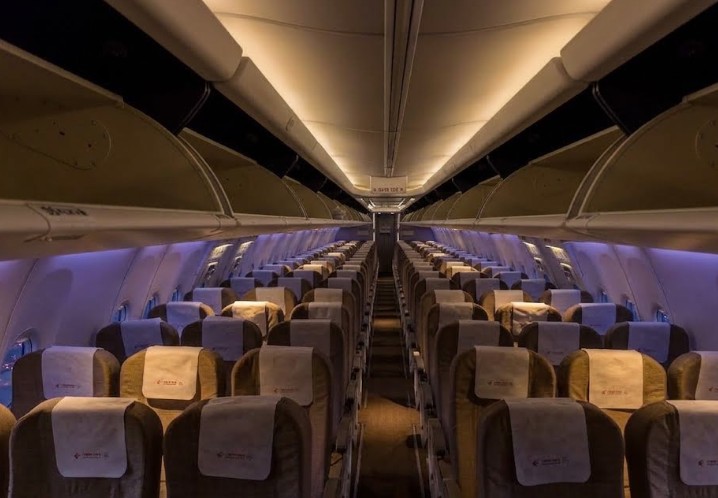
✈️ Quick Verdict
Aircraft: Boeing 737-800 — four layouts at 170, 176, 158 and 158 seats
Layout: Business 2-2 A C | J L · Economy 3-3 A B C | J K L. There is no D, E or F on this aircraft
Version lottery: Yes — and the exit rows move. The good exit row is 42, 42, 40 or 38 depending on which jet you draw
The one-look test: read the last economy row. 57 = 170-seat, 58 = 176-seat, 55 = 158-seat, 53 = the 20-Business jet. Or count Business rows: five rows means the rare one
Best seat — Business: row 6 on all four — the bulkhead, extra legroom, rated green throughout
Best seat — economy: the second exit row — 42, 42, 40 or 38. It is the only row rated green across all six seats on every configuration
Seats to avoid: the last two rows — 56–57, 57–58, 54–55 or 52–53 — twelve red seats at the rear lavatories on every jet
IFE: Panasonic eX1 in Business only on three of the four; none recorded on the 176-seat jet · Wi-Fi: none fitted on any of them
The letters: there is no D, E or F
China Eastern letters the 737-800 economy cabin A B C | J K L. The window pair is A and L, the middles are B and K, and the aisle seats are C and J. There is no D, no E and no F anywhere on the aircraft.
This catches people constantly, because a 737-800 is a 737-800 and almost every other airline in the world letters the right-hand block D E F. If you have a seat assignment for 35F on a China Eastern 737, either it is not a China Eastern 737 or the number is wrong. Business is the same idea: A C | J L, with no D or F.
It is also different from China Southern, which letters the same aircraft A B C | H J K. Two of the largest 737-800 operators in the world, the same aeroplane, three different right-hand blocks between them and the rest of the industry.
The version lottery: four cabins and a moving exit row
All four configurations share a shape. Business starts at row 6, economy starts at row 31, and there are two overwing exit rows about two-thirds of the way down the cabin. What moves is where everything sits.
| 170-seat | 176-seat | 158-seat | 158-seat, 20 Business | |
|---|---|---|---|---|
| Business | 8 seats, rows 6–7 | 8 seats, rows 6–7 | 8 seats, rows 6–7 | 20 seats, rows 6–10 |
| Economy | 162, rows 31–57 | 168, rows 31–58 | 150, rows 31–55 | 138, rows 31–53 |
| Exit rows | 41 and 42 | 41 and 42 | 39 and 40 | 37 and 38 |
| The one to book | 42 | 42 | 40 | 38 |
| Does not fully recline | 40 and 41 | 40 and 41 | 38 and 39 | 36 and 37 |
| Last two rows (red) | 56, 57 | 57, 58 | 54, 55 | 52, 53 |
| Row 31 bulkhead wall | 50cm (19in) | 50cm (20in) | 46cm (18in) | 48cm (19in) |
| Best window pairs | 51 and 53 | 53 and 55 | 49 and 51 | 47 and 49 |
| No window | None | None | None | 33A |
Fleet records rank the 170-seat layout as much the largest sub-fleet, the 176-seat one next, then the 158-seat jet, with the 20-Business version by far the rarest. We are not converting that into odds, because the underlying figures are not a dependable aircraft count — but the ordering is sound, and the practical upshot is that you should plan for the 170-seat cabin and check.
The trap: the first exit row is the wrong one
This is the single most useful thing to know about a China Eastern 737-800, and it is true on all four configurations.
There are two overwing exit rows next to each other. Both have the extra space. But the first of the pair does not fully recline — the exit behind it has to stay clear — and neither does the ordinary row immediately in front of it. Only the second exit row gets the legroom and the recline, and on every one of the four configurations it is the only row in the whole economy cabin rated green across all six seats.
| Jet | Does not recline | Does not recline | Book this one |
|---|---|---|---|
| 170-seat | Row 40 (ordinary) | Row 41 (exit) | Row 42 |
| 176-seat | Row 40 (ordinary) | Row 41 (exit) | Row 42 |
| 158-seat | Row 38 (ordinary) | Row 39 (exit) | Row 40 |
| 158-seat, 20 Business | Row 36 (ordinary) | Row 37 (exit) | Row 38 |
On the 176-seat jet the trap is sharper still, because extra legroom is recorded on both exit rows — 41 and 42 are both flagged, so a booking map will offer you either as an extra-space seat. Row 41 is the one that does not recline. On the other three configurations only the second row carries the legroom note, which at least gives you a hint.
Row 31 looks like a bulkhead and is tighter than one
Row 31 is the first row of economy on all four aircraft, sitting behind the Business cabin, and on all four it is rated amber across every seat. The reason is specific: it has less legroom than a typical bulkhead, with the wall closer than most — 46cm on the 158-seat jet, 48cm on the 20-Business one, and 50cm on the two larger cabins.
You also lose underseat storage, because there is a bulkhead rather than a seat in front of you. So row 31 gives you the bulkhead penalties without the bulkhead payoff. It is the row people book when they see it at the front of the economy cabin and assume the front means more space.
If you want space on a China Eastern 737-800, the second exit row is the answer and row 31 is not.
Business: row 6 on all four
The Business cabin is 2-2, lettered A C | J L — A and L are the windows, C and J the aisles. On three of the four configurations it is two rows and eight seats; on the rare fourth it is five rows and twenty.
Row 6 is rated green across all four seats on every configuration, because it is the bulkhead row and leads the cabin with extra room ahead. 6C also gets a partial bulkhead with some extra foot room to one side. Row 7 is unremarked — a perfectly ordinary Business row with nothing to recommend or avoid it.
On the 20-seat Business jet, rows 8 and 10 are unremarked and 9A and 9L are rated green for their window alignment. Row 6 is still the pick.
The rest of economy
The back is the same on all four
The last two rows of every configuration are rated red across all twelve seats: a lavatory is immediately behind and the final row does not recline at all. That is rows 56 and 57 on the 170-seat jet, 57 and 58 on the 176-seat one, 54 and 55 on the 158-seat jet, and 52 and 53 on the 20-Business one. On each aircraft the last row also backs onto the galley in its B, C, J and K seats.
The row before that carries a lavatory-traffic note too: 55B and 55K on the 170-seat jet, all six seats of row 56 on the 176-seat one, 53B and 53K on the standard 158-seat jet, and 51A, 51B, 51K and 51L on the 20-Business one.
The window seats to take
Each configuration has two rows where A and L are rated green for window alignment, and they are the seats to book if a view matters more than legroom: rows 51 and 53 on the 170-seat jet, 53 and 55 on the 176-seat one, 49 and 51 on the 158-seat jet, and 47 and 49 on the 20-Business one.
Windows sit out of line at 37A, 38A and 38L on the 170-seat jet; at 37A, 38A, 38L, 50A, 50L, 52A and 52L on the 176-seat one; at 35A, 36A, 36L, 52A and 52L on the 158-seat jet; and at 32A, 32L, 50A and 50L on the 20-Business one.
33A on the 20-Business jet has no window at all — wall only. It is the only confirmed windowless seat across the four configurations, and it is on the rarest of them.
Quick-pick summary
| You are | Book | Why |
|---|---|---|
| In Business | Row 6 | The bulkhead row, extra legroom, green on all four configurations |
| Want legroom in economy | Row 42, 42, 40 or 38 — the second exit row | The only all-green row in economy on every jet: legroom and recline |
| Want a window | The green A/L pairs — rows 51/53, 53/55, 49/51 or 47/49 | The best-aligned windows on each configuration |
| A couple | A and C, or J and L, in any green row | Window and aisle with the middle seat between you rather than beside you |
| Anyone | Avoid row 31 | A bulkhead that is tighter than a normal bulkhead, with no underseat storage |
| Anyone | Avoid the last two rows | Twelve red seats at the rear lavatories on every configuration, and the last row does not recline |
FAQ
Why is there no D, E or F seat?
China Eastern letters the right-hand block of its 737-800 cabin J K L rather than D E F. The aircraft is a standard six-abreast 737 — only the lettering is different. It is a common convention on Chinese carriers, though not a universal one: China Southern letters the same block H J K.
How do I tell which configuration I am on?
Read the last row number in economy: 57 is the 170-seat jet, 58 the 176-seat one, 55 the standard 158-seat one and 53 the rare 20-Business version. If you cannot see the whole cabin, count the Business rows — five rows of Business only exists on the rarest configuration.
Which exit row should I book?
Always the second of the pair. Row 42 on the 170 and 176-seat jets, row 40 on the 158-seat one, row 38 on the 20-Business one. The first exit row has the same space but does not fully recline, because the exit behind it must stay clear.
Is row 31 worth booking for the legroom?
No. It has less legroom than a typical bulkhead on all four configurations — the wall is 46 to 50cm away — and you lose underseat storage as well. Every seat in the row is rated amber. The second exit row gives you more space for the same or less money.
Is there Wi-Fi or seatback entertainment?
No Wi-Fi on any of the four configurations. Panasonic eX1 seatback entertainment is recorded in the Business cabin on three of them — and on the 170-seat jet specifically it is fitted only to the newer of two cabin generations. The 176-seat jet has no entertainment system recorded at all. Treat economy as a bring-your-own-device cabin.
Which seats have no window?
33A, and only on the 158-seat jet with the twenty-seat Business cabin. Everywhere else the worst you get is a window set behind the seat, which means leaning back to see out rather than a blank wall.
Related Guides
- China Eastern A330-300 Seat Selection Guide (2026)
- China Eastern 787-9 Seat Selection Guide (2026)
- China Eastern Comac C919 Seat Selection Guide (2026)
- China Southern 737-800 Seat Selection Guide (2026)
- China Eastern A350-900 Seat Selection Guide (2026)
- China Eastern A320neo Seat Selection Guide (2026)
- China Eastern A321neo Seat Selection Guide (2026)