Best Airplane Seats for Families With Kids: How to Pick the Right Seats by Age and Aircraft
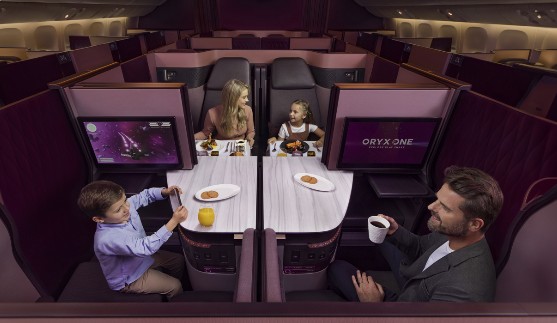
Flying with children doesn't have to be stressful. With a bit of planning, you can choose seats that make your family more comfortable, keep kids entertained, and reduce the number of in-flight meltdowns.
Traveling with kids can turn a routine flight into a logistical puzzle. Between keeping little ones occupied, managing bathroom trips, and helping everyone get some rest, seat selection becomes one of the most important decisions you make when booking family travel.
The right seat can mean the difference between a smooth journey and hours of frustration. This guide walks you through how to pick the best airplane seats when flying with children of different ages, on different aircraft types, and in different family configurations.
Why the Right Airplane Seat Matters When Flying With Kids
Adults can adapt to less-than-ideal seating. Children usually can't. A cramped seat, limited legroom, or being far from the bathroom can quickly escalate from a mild inconvenience to a full-blown meltdown.
Strategic seat selection helps with:
- Proximity to lavatories – Essential for potty-training toddlers and younger children.
- Space for movement – Kids wiggle, fidget, and need room to stretch.
- Access to entertainment – Seatback screens and power outlets become critical on longer flights.
- Sleep potential – Window seats and quieter zones help kids fall (and stay) asleep.
- Boarding and deplaning – Seats closer to the front can shorten the "are we there yet?" phase.
The ideal seat is different for a lap infant on a 9-hour overnight A350 than for a 10-year-old on a 90-minute A320 hop, so it's worth matching your choice to both age and aircraft type.
Best Airplane Seats by Age Group (Infants, Toddlers, School-Age Kids)
Infants (Under 2 Years)
For lap infants on long-haul flights, bulkhead seats are often the gold standard. Many airlines offer bassinets on wide-body aircraft (like the 777, 787, A330, A350, and A380) that attach to the bulkhead wall, giving your baby a place to sleep without being held the entire flight.
Key considerations:
Request bassinet seats early
On long-haul international routes, bassinet positions are limited and often assigned on a first-come basis. Request them when booking and reconfirm with the airline.
Bulkhead benefits and trade-offs
Bulkhead seats often offer:
- Extra floor space for organising baby gear
- No seat in front (so no one reclining into your lap)
However, tray tables and screens may be in the armrests, slightly narrowing the seat.
Aisle access for a parent
If one adult is holding the baby, an aisle seat makes it easier to walk with a fussy child or reach the lavatory quickly.
Avoid exit rows
Lap infants and car seats are generally not allowed in exit rows, and there are strict age restrictions.
Toddlers (2–4 Years)
Toddlers are too large for bassinets but often too young to sit still. They may be in the middle of potty training, making bathroom access absolutely critical.
Optimal seating strategies:
Window + middle for child and parent, aisle for the other adult
A common setup is:
- Toddler at the window (less chance of escaping into the aisle)
- Parent next to them
- Second adult on the aisle (either same row or directly across)
Rear or mid-cabin on narrow-bodies
On many single-aisle aircraft (e.g. A320, 737), being closer to the rear lavatories shortens bathroom walks. On wide-bodies with multiple lav blocks, check the seat map—sometimes mid-cabin is best.
Extra legroom if budget allows
Bulkhead or extra-legroom rows can be helpful for:
- Car seats
- Toddlers who like to stand quietly in front of their seat
Just be mindful of rules around car seats and armrest design.
Avoid over-wing seats with missing or misaligned windows
For many aircraft (especially 737s and A320s), some over-wing seats have poor or no window view. For kids, the window is free entertainment.
School-Age Children (5–12 Years)
Older kids have more seating flexibility, but comfort and entertainment are key to surviving longer flights.
What to prioritise:
Working seatback entertainment
On long-haul 777, 787, A350, and A380 aircraft, aim for rows known to have reliable IFE if possible. A seat with a broken screen is misery at this age.
Power outlets / USB ports
Seats with power let you keep tablets, headphones, and handhelds going on 8–12 hour flights.
Window seat for each child if possible
- Helps with sleep (somewhere to lean)
- Gives them a view and a "space" of their own
Avoid galley and lavatory clusters
Constant noise, light, and queues make it harder to sleep, especially on overnight sectors.
Short-Haul vs Long-Haul Flights With Kids
Short-Haul (Under ~3 Hours)
On shorter flights:
Convenience beats perfection
Being together and near a lavatory is usually more important than the exact row.
Aisle access for parents
Make it easy to reach the bathroom and grab things from the overhead.
Front-of-cabin can be helpful
Faster boarding and deplaning reduces overall "transition stress".
Long-Haul and Overnight Flights
On long-haul flights (especially overnight):
Prioritise sleep and quiet
Look for:
- Smaller "mini-cabins" (common on 777/787/A350/A380)
- Rows away from galleys and lavs
Larger aircraft usually win
Given a choice between a narrow-body and a wide-body for a long leg, the wide-body (777, 787, A350, A330, A380) typically offers:
- Better entertainment
- More seating options
- Slightly more room and calmer cabin feel
Think in "phases"
- Takeoff and first meal
- Quiet / sleep window
- Pre-landing wake-up
Choose seats that work across all three, not just for boarding.
Best Seat Configurations for Families
Two Adults, One Child
A popular strategy:
Book window + aisle in the same row, leaving the middle empty.
- If the flight is full and someone gets the middle, they'll often happily swap for the window or aisle so you can sit together.
- If it stays empty, you've scored extra space for toys, snacks, and shifting positions.
This works particularly well in a 3-3 configuration (e.g. A320/737) or side blocks of 3-3-3 / 3-4-3 wide-body layouts.
Two Adults, Two Children
On 3-3 single-aisle layouts (most A320s/737s):
Take four seats across two rows rather than trying to squeeze into one row of three.
Example:
- Row 15: Parent + child
- Row 16: Parent + child
This gives each parent direct supervision and avoids someone being separated across the aisle.
On wide-bodies with 2-4-2 or 3-3-3:
2-4-2:
Put the family of four in the middle block of four: kids in the middle seats, parents on the aisles.
3-3-3:
- Option 1: 3 seats in one row + 1 directly across the aisle.
- Option 2: Two and two across adjacent rows, as on narrow-bodies.
Solo Parent With Kids
When you're the only adult, aisle access is essential.
- Put yourself on the aisle, with children in the window/middle so they're "contained".
- For multiple kids, consider:
- Bulkhead rows where you can see everyone easily.
- Two rows with you on the aisle and a child either beside or directly in front of you.
Make bathroom access and the ability to step out without disturbing strangers your top priorities.
Seats to Avoid When Flying With Children
| Seat Type | Why to Avoid |
|---|---|
| Exit Rows | Children under ~15 are prohibited; car seats not allowed by regulation |
| Last Row | Often limited/no recline; close to lav noise, smells, and queues |
| Galley-Adjacent | Constant noise, light, and foot traffic; tough for naps and calm downtime |
| Misaligned Windows | Kids lose the view – a major source of free entertainment |
| Known "bad" seats | Some rows have broken IFE, reduced legroom, or missing windows; avoid if possible |
Checking detailed seat information before you fly helps you dodge the worst offenders, especially on older 777s or high-density 787s with tight 3-3-3 layouts.
How to Use SeatCompare.ai for Family Seat Selection
Before you lock in your booking, you can use SeatCompare.ai to research your exact aircraft type and pick seats that work for your family.
A simple process:
1. Enter your flight details
Identify the aircraft type (e.g. 777-300ER vs 787-9 vs A350-900) and the specific cabin layout for your flight.
2. Check comfort metrics that matter for kids
Look at:
- Seat pitch and width
- Overall cabin layout (3-3-3 vs 3-4-3 on a 777, 2-4-2 vs 3-3-3 on an A330, etc.)
- Notes about tight or more spacious rows
3. Look for family-friendly seat notes
SeatCompare's seat guides and flight cards can highlight:
- Proximity to lavatories (good for potty training)
- Quieter mini-cabins away from galleys
- Rows with better window alignment
- Known problem seats (reduced recline, missing windows, awkward armrests)
4. Compare across airlines on the same route
If you're flexible, you can see which airline/aircraft combo gives you:
- Better seat width and pitch
- More family-friendly layouts
- Better entertainment options for kids
5. Match seats to your family type
For example:
- Lap infant on a long-haul A350? Look for bassinet-equipped bulkhead rows.
- Two school-age kids on a 777? Check which version has a nicer 3-3-3 vs tighter 3-4-3 layout.
The goal is simple: instead of just accepting whatever row is offered, you use SeatCompare.ai to choose the specific seats that make family flying easier.
Pro Tips From Frequent Family Flyers
Book Early
The most family-friendly seats (bulkheads, mini-cabins, good windows) are limited. Reserve them as soon as you book, and call the airline if you need bassinet positions.
Consider Off-Peak Flights
Red-eyes and early-morning flights are often less full, increasing your chances of spare seats nearby. Overnight flights also line up better with kids' natural sleep cycles.
Keep an Eye on Aircraft Changes
Airlines often swap aircraft types (e.g. a 787 to an older 767 or a different 777 layout). This can change:
- Seat width and pitch
- IFE availability
- Bulkhead and bassinet positions
Check your booking periodically and re-select seats if the aircraft changes.
Know Your Aircraft Types
Given a choice:
- A wide-body (777, 787, A350, A330, A380) usually beats
- A narrow-body (737, A320 family) for long flights.
You'll generally get better entertainment, more seat options, and a calmer cabin feel.
Family Flying FAQs
What's the best seat on a plane for a toddler?
For most toddlers, a window seat with a parent next to them works best. It limits aisle escapes, gives them something to look at, and keeps you close for comfort and snacks. Try to sit near a lavatory but not directly next to it.
Is a window or aisle better for kids on a plane?
For younger kids, the window is usually better (view + containment). Parents should take the aisle seats so they can get up easily for bathroom trips and walks.
Can children sit in the exit row?
No. Exit rows are usually restricted to passengers over a certain age (often 15+) who can assist in an emergency. Car seats and lap infants are not allowed in exit rows.
Where should a family of four sit on a plane?
On a 3-3 layout, consider two rows of two (parent + child in each row). On a 2-4-2 wide-body, the middle block of four works well: kids in the centre, adults on each aisle.
Are bulkhead seats always best for families?
Bulkhead seats can be excellent for infants (bassinets, extra space), but they also often have fixed armrests and closer proximity to galleys. For older kids, a quieter non-bulkhead row in a mini-cabin can sometimes be better.
Final Thoughts
Seat selection is one of the few parts of air travel you can really control. Taking time to understand your aircraft, your route, and your children's needs can transform the experience for everyone.
Use tools like SeatCompare.ai to:
- Check your exact aircraft and layout
- Avoid the worst seats
- Find the rows and configurations that actually work for families
The perfect seat won't guarantee a tantrum-free flight, but it will give you the best possible foundation for a smoother, calmer journey.
When you're ready to plan your next family trip, start by looking up your flight and comparing seats on SeatCompare.ai.