American A321XLR Seat Map & Best Seats (2026)
Updated 2026 · Verified seat-level data
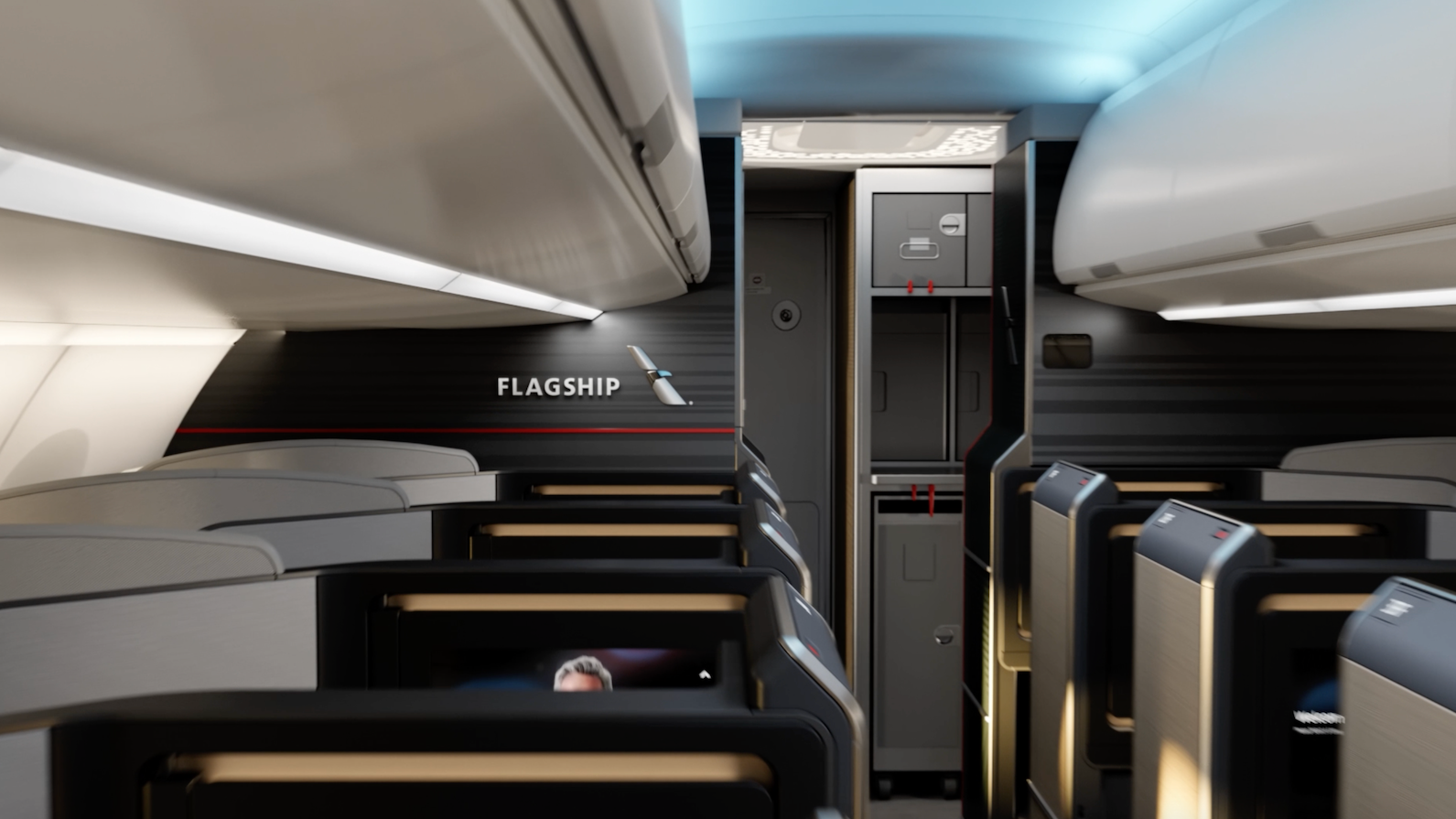
American's Airbus A321XLR is a long-range narrowbody built to fly premium transcontinental routes and new "long-thin" international routes where a widebody would be too large. It carries 155 seats in three cabins: 20 Flagship Suites with privacy doors in a 1-1 layout, a dedicated 12-seat Premium Economy cabin, and a standard 3-3 Main Cabin of 123 seats. American currently operates a small fleet of these (six aircraft), so it shows up on a limited set of routes as deliveries continue.
The single most useful thing to know before you fly: an "American A321" can be several completely different aircraft. The XLR is the only one with lie-flat suites and a Premium Economy cabin — get on the wrong A321 and you're in a recliner "First" seat with no premium economy at all. The identification section below tells you how to be sure.
✈️ Quick Verdict
| Aircraft | Airbus A321XLR (A321-253NY) |
| Fleet size | 6 aircraft |
| Config | 20 Flagship Suite · 12 Premium Economy · 123 Main Cabin = 155 |
| Layouts | Suite 1-1 · Premium Economy 2-2 · Main Cabin 3-3 |
| Version lottery | Yes — shares the "32Q" code with AA's 190-seat domestic A321neo. Confirm before you book. |
| Best Flagship Suite | Rows 2–9 (any A or F) — clear of the forward galley and the row-1 window issue |
| Best Premium Economy | 12A / 12F (windows, the only PE row with no caveats) |
| Best Main Cabin | Row 15 for legroom (36" pitch, exit); mid-cabin windows rows 16–24 for a quiet standard seat |
| Seats to avoid | Suite: 1A/1F · PE: row 11 (bulkhead) & row 13 (limited recline) · Main: rows 32–34 (lavatory zone) |
| IFE | Thales AVANT — seat-back 4K touchscreens, on-demand, Bluetooth audio pairing |
| Power | 110V AC + USB-C (60W) at every seat; wireless charging in Suite & Premium Economy |
| WiFi | Viasat Ka-band — reliable for browsing and light streaming |
Which American A321 am I on?
This is where most people get caught out. American operates several A321 sub-fleets that look identical on a booking screen but are wildly different aircraft. The XLR even shares its IATA code (32Q) with the domestic A321neo, so the code alone won't save you.
| You might be on… | Total seats | Front cabin | Premium Economy? | Tell-tale sign |
|---|---|---|---|---|
| A321XLR (this guide) | 155 | 20 lie-flat Flagship Suites (1-1) | Yes — 12 seats | The only A321 with suites and a premium economy cabin |
| A321neo (domestic) | 190–196 | 20 recliner "First" (2-2) | No | High seat count, recliner First, no PE |
| A321T (transcon) | 102 | 10 Flagship First + 20 Flagship Business | No | Two premium cabins, very low seat count |
| A321ceo "Oasis" | 190 | 20 recliner First (2-2) | No | High seat count, no seat-back screens in economy |
The quick check: if your seat map shows 20 suites in a 1-1 layout, a small 12-seat Premium Economy cabin, and 155 seats total, you're on the A321XLR. If you see a Premium Economy cabin on any American A321, it's the XLR — no other A321 has one.
Seat Map Summary
| Cabin | Rows | Layout | Notes |
|---|---|---|---|
| Flagship Suite | 1–10 | 1-1 | 20 Collins Aerospace Aurora suites with doors |
| Premium Economy | 11–13 | 2-2 | 12 Recaro R5 recliners |
| Main Cabin Extra | 14–15 | 3-3 | Extra-legroom exit rows (no recline) |
| Main Cabin | 16–34 | 3-3 | Standard economy; rear rows near lavatories |
Seat letters: Suite A | F · Premium Economy A-C | D-F · Main Cabin A-B-C | D-E-F.
Flagship Suite (Business)
American's newest premium product, built on the Collins Aerospace Aurora platform: 20 inward-facing herringbone suites arranged 1-1 (a single seat on each side of the aisle), so every passenger gets direct aisle access with no one to climb over. Each suite has a sliding privacy door — though on early flights the doors are locked open pending certification, so don't count on full door privacy just yet.
Specifications
- Layout: 1-1, 20 suites across rows 1–10
- Width: 21" · Recline: lie-flat (180°)
- Screen: 17" 4K touchscreen (pull-out) with Bluetooth audio pairing
- Power: 110V AC + USB-C (60W) + wireless charging
- IFE: Thales AVANT on-demand
✅ Best seats — Flagship Suite
| Category | Seats | Reason |
|---|---|---|
| Best overall | Rows 2–9 (any A/F) | Clear of the forward galley and the row-1 window issue; true window alignment |
| Quietest | Rows 4–7 | Mid-cabin, furthest from galley traffic |
| Fastest exit | 2A / 2F | Front of the usable cabin without the row-1 drawbacks |
⚠️ Seats to be aware of — Flagship Suite
| Seats | Reason |
|---|---|
| 1A / 1F | Reduced window view (a plugged/blanked window sits alongside), and no overhead bin above these seats |
| 1F | Also backs onto the forward galley — expect some noise and light during meal prep |
Doors note: privacy doors are fitted to every suite but are currently locked open pending certification. On early flights the suite is open-plan in practice.
Premium Economy
A genuine dedicated cabin — not blocked-middle economy — positioned between the suites and the Main Cabin. Twelve Recaro R5 recliners in a 2-2 layout across rows 11–13.
Specifications
- Layout: 2-2, 12 seats across rows 11–13
- Width: 21" · Pitch: 37" · Recline: 8"
- Screen: 13.3" 4K touchscreen
- Power: 110V AC + USB-C (60W) + wireless charging
- Features: adjustable calf rests and foot bars, adjustable headrest with privacy wings, storage pocket beneath the armrest, retractable tablet holder
✅ Best seats — Premium Economy
| Category | Seats | Reason |
|---|---|---|
| Best overall | 12A / 12F | The only PE row with no caveats — window seats, no bulkhead or recline penalty |
| Best aisle | 12C / 12D | Same clean row, aisle access |
| Best for couples | 12A+12C or 12D+12F | A clean pair with no compromise |
⚠️ Seats to be aware of — Premium Economy
| Seats | Reason |
|---|---|
| Row 11 (11A/11C/11D/11F) | Bulkhead: extra legroom, but the wall sits closer than a typical bulkhead, no underseat storage for takeoff/landing, and the tray table/screen live in the armrest (slightly narrower seat) |
| Row 13 (13A/13C/13D/13F) | Limited recline — the exit row directly behind needs a clear path |
| Solo travellers | Prefer a window (A/F) over the aisle for a little more separation |
Main Cabin
Standard 3-3 economy in Collins Aerospace Meridian slimline seats, rows 14–34. Rows 14 and 15 are Main Cabin Extra — they're also the emergency exit rows, so they trade recline for legroom.
Specifications
- Layout: 3-3, 123 seats across rows 14–34
- Width: 18" · Pitch: 31" standard (36" at row 15) · Recline: 5" (row 14 does not recline)
- Screen: 11.6" 4K touchscreen with Bluetooth pairing
- Power: 110V AC + USB-C (60W)
- Features: 4-way adjustable headrest, moveable armrests (all rows except row 14), retractable tablet holder
✅ Best seats — Main Cabin
| Category | Seats | Reason |
|---|---|---|
| Best legroom | Row 15 (A–F) | Exit row, 36" pitch — the most legroom in economy |
| Also extra legroom | Row 14 (A–F) | Main Cabin Extra / exit; the bulkhead partitions sit on raised pedestals, so there's foot space underneath |
| Best standard seat | Rows 16–24, any A or F | Mid-cabin windows, quiet, well clear of the lavatories |
| Best for couples | Any A+B or E+F pair | Window + middle, avoiding the center block |
🚫 Seats to avoid — Main Cabin
| Seats | Reason |
|---|---|
| Rows 32, 33, 34 | The rear lavatory zone — noise, odours and queue traffic. Row 33 is affected on both sides; row 34 (D/E/F only) is the last row, wedged beside the lav and galley |
| 31A / 31B / 31C | Sit near a lavatory behind on the left side |
| Rows 14 & 15 (if you want to recline) | Extra legroom but neither row reclines; row 14 also has the tray/screen in the armrest |
| Middle seats (B / E) | Always the last pick in any row |
Cabin Features at a Glance
| Feature | Flagship Suite | Premium Economy | Main Cabin |
|---|---|---|---|
| Layout | 1-1 | 2-2 | 3-3 |
| Seats | 20 | 12 | 123 |
| Rows | 1–10 | 11–13 | 14–34 |
| Width | 21" | 21" | 18" |
| Pitch / recline | Lie-flat (180°) | 37" / 8" | 31" (36" row 15) / 5" |
| Screen | 17" 4K | 13.3" 4K | 11.6" 4K |
| Power | AC + USB-C 60W + wireless | AC + USB-C 60W + wireless | AC + USB-C 60W |
| Privacy door | Yes (locked open on early flights) | No | No |
Quick-Pick Summary
| Traveller | Pick | Why |
|---|---|---|
| Solo, want to sleep | Any Flagship Suite, rows 2–9 | Lie-flat, aisle access, quiet mid-cabin |
| Solo, Premium Economy | 12A or 12F | Clean window, no bulkhead/recline penalty |
| Couple in PE | 12A+12C or 12D+12F | A clean pair with no middle seat |
| Legroom on a budget | Row 15 (main cabin exit) | 36" pitch — accept no recline |
| Family in economy | Mid-cabin rows 16–24 | Quiet, away from lavatories |
| Avoid at all costs | Rows 32–34 | Rear lavatory zone |
Comparable Guides
- American 787-9 Seat Guide — Flagship Suite scaled up to a widebody
- American A321T Seat Guide — the transcon lie-flat this XLR is replacing
- American A321neo Seat Guide — the domestic variant you might be confused with
- JetBlue A321 Mint Seat Guide — the US transcon competitor
- Delta A330-900neo Seat Guide — Delta One suites with doors
FAQ
Is this the same as the A321T?
No. The A321XLR is a newer aircraft with a single premium cabin — Flagship Suite — plus a Premium Economy cabin. The A321T has two premium cabins (Flagship First and Flagship Business) and no Premium Economy.
How do I know I'm actually booked on the XLR and not a domestic A321neo?
Look for the Premium Economy cabin. The XLR is the only American A321 with one. A 155-seat total, 20 suites in 1-1, and a 12-seat premium economy cabin confirm it.
Do all the suites have privacy doors?
Yes, every suite has a door — but on early flights the doors are locked open pending certification, so treat the cabin as open-plan for now.
Which suite is best for sleeping?
Any suite is a lie-flat bed. For the quietest sleep, target the mid-cabin rows 4–7, away from the forward galley.
Is there Wi-Fi?
Yes — Viasat Ka-band, reliable for browsing and light streaming. Availability and pricing can vary by cabin and status.
What's the best economy seat if I just want legroom?
Row 15 — it's the exit row with 36" of pitch. The trade-off is that it doesn't recline.